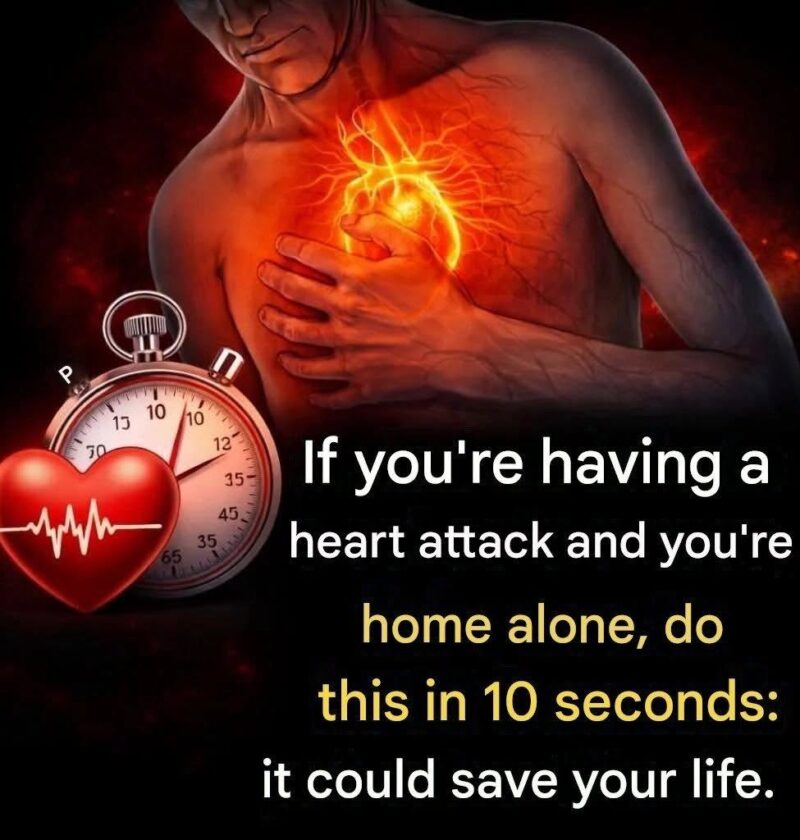
If you’re referring to the viral claim “If you have a heart attack at home, do this in 10 seconds and you can save your life,” be very cautious. There is no 10-second maneuver that can stop a heart attack.
🚨 What to actually do
1. Call your local emergency service immediately.
Don’t wait to see whether the symptoms disappear. Emergency medical teams can begin treatment on the way to the hospital.
M
Mayo Clinic
+1
2. Sit down and rest. Avoid walking around or exerting yourself while waiting for help.
3. Aspirin may help some people. Current AHA/Red Cross guidance says an alert adult with non-traumatic chest pain may chew 162–325 mg aspirin, provided they don’t have an aspirin allergy or have been told by a healthcare professional not to take it. If you’re uncertain, wait for emergency personnel. Calling for help comes first.
C
cpr.heart.org
4. If you have prescribed nitroglycerin, take it exactly as previously instructed. Don’t use someone else’s medication.
M
Mayo Clinic
❌ Don’t believe the “cough CPR” trick
Social-media posts sometimes claim that repeatedly coughing hard can “restart” the heart or clear a blockage. It is not an effective treatment for a heart attack and shouldn’t delay emergency care.
W
www.heart.org
If the person collapses, is unresponsive and isn’t breathing normally, that’s potentially cardiac arrest—not simply a heart attack. Call emergency services, start hands-only CPR (100–120 chest compressions per minute) and use an AED if available.
M
Mayo Clinic
+1
Possible heart-attack symptoms: chest pressure/squeezing, pain spreading to the arm, back, neck or jaw, shortness of breath, cold sweating, nausea, or dizziness. Symptoms can be less typical in women, older adults and people with diabetes.
M
Mayo Clinic
+1
If these symptoms are happening right now, call your local emergency service now rather than trying a home remedy.
M
C
W
Sources