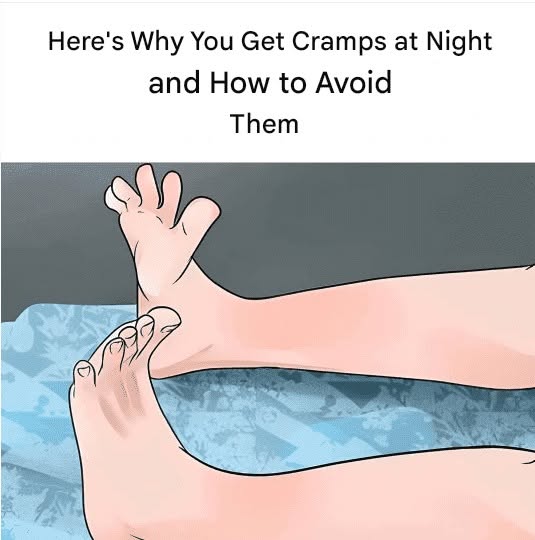
What Actually Causes a Nighttime Cramp?
A cramp occurs when a muscle contracts involuntarily and doesn’t immediately relax. During the day, your muscles are constantly working—walking, standing, exercising and maintaining your posture.
At night, you’re finally resting, but the muscles and nerves controlling them don’t simply switch off.
Several factors may make nighttime cramps more likely.
1. Your muscles may be tired
One of the most common contributors is muscle fatigue.
If you’ve spent the day walking a lot, exercising, climbing stairs, standing for long periods or doing unfamiliar physical activity, your leg muscles may become fatigued.
A tired muscle can be more prone to involuntary contractions, which may explain why some people experience cramps after particularly active days.
2. You may not be drinking enough fluids
Dehydration can contribute to muscle cramping.
This is especially relevant after heavy exercise, sweating, hot weather or an illness that causes fluid loss.
However, it’s important not to assume that every nighttime cramp means you’re dehydrated. Many people who experience leg cramps are adequately hydrated, and the exact cause may remain unknown.
3. Staying in one position can play a role
Spending long periods sitting or keeping your legs in the same position may contribute to nighttime cramps.
This is one reason regular movement can be helpful. If you’ve been sitting for several hours, getting up, walking around and gently moving your legs gives your muscles a chance to work through their normal range of motion.
4. Aging changes your muscles
Nighttime leg cramps become more common as people get older.
As we age, muscle mass and muscle function gradually change. Tendons can also become less flexible, which may contribute to the tendency for muscles to cramp.
This doesn’t mean that cramps are an inevitable part of aging—but they are more common in older adults.
5. Pregnancy can trigger leg cramps
Many pregnant women experience leg cramps, particularly later in pregnancy.
The additional physical demands of pregnancy, changes in circulation and other physiological changes may contribute.
If you’re pregnant and experiencing frequent or severe cramps, mention them to your healthcare professional, particularly if another symptom accompanies the cramping.
6. Some medications can contribute
Certain medications have been associated with muscle cramps.
For example, some medicines that affect fluid balance or blood pressure can contribute to cramping in certain people. Other medications may also be associated with muscle cramps as a side effect.
If your cramps began after starting a new medication, don’t stop the medicine yourself. Ask your doctor or pharmacist whether it could be contributing.
7. Nerve problems can sometimes be involved
Muscles and nerves work together to produce normal movement.
Conditions that affect the nerves can sometimes contribute to muscle cramps. Diabetes, for example, can cause nerve damage that affects the legs.
Cramps associated with persistent numbness, weakness, burning sensations or changes in sensation deserve medical attention.
8. Circulation problems may sometimes contribute
Certain circulation disorders can cause leg discomfort or cramping.
For example, peripheral artery disease can cause pain or cramping in the legs, particularly during activity.
If you regularly experience leg pain along with coldness, skin-color changes, wounds that heal poorly or other circulation symptoms, speak with a healthcare professional.
9. Electrolyte abnormalities can contribute
Minerals such as potassium, calcium and magnesium are important for normal nerve and muscle function.
Abnormal levels can sometimes be associated with muscle cramps.
But there’s an important misconception here: not every nighttime leg cramp means you are magnesium-deficient.
Taking supplements without knowing whether you need them isn’t necessarily helpful and can sometimes cause problems. If cramps are frequent, a healthcare professional can determine whether testing or supplementation makes sense.
Why Do Cramps Hurt So Much?
During a cramp, the affected muscle suddenly contracts and remains contracted.
You may notice that the muscle becomes extremely firm or feels like a hard lump under the skin.
Because the contraction is involuntary, you can’t simply tell the muscle to relax.
Fortunately, most cramps resolve on their own within seconds or several minutes. The muscle may remain tender afterward, especially if the contraction was particularly strong.
What Should You Do When a Cramp Strikes?
Don’t panic.
The goal is to gently encourage the muscle to relax.
If your calf cramps:
Straighten your leg.
Gently extend the cramped leg rather than keeping the knee bent.
Pull your toes toward you.
Slowly bring your toes and the top of your foot toward your face. Don’t force the stretch.
Massage the muscle.
Use your hands to gently massage the cramped area.
Stand and walk if it is safe.
Putting weight on the affected leg and taking a few gentle steps may help the muscle relax.
Try warmth.
A warm shower, bath or heating pad may help relax a tight muscle.
If the muscle remains sore afterward, gentle movement and appropriate self-care may help with the lingering discomfort.
How Can You Reduce Nighttime Cramps?
There isn’t a guaranteed way to prevent every cramp, but a few habits may help.
Stretch before bed
Gentle calf stretching before going to sleep may be useful for people who experience recurring nighttime cramps.
One simple stretch is to stand facing a wall, place your hands against it and gently stretch one calf while keeping the heel on the floor.
The stretch should feel gentle—not painful.
Stay hydrated
Drink fluids regularly throughout the day.
If you’ve been exercising heavily or sweating significantly, you’ll generally need more fluid than usual.
Keep moving during the day
If you sit for long periods, get up regularly and walk around.
Gentle movement can help keep your leg muscles from becoming stiff and inactive.
Increase exercise gradually
If you’re starting a new workout routine, don’t suddenly go from very little activity to intense exercise.
Gradually increasing the duration and intensity gives your muscles time to adapt.
Review medications with your doctor
If recurring cramps began after a medication was started or a dose was changed, tell your healthcare professional.
Never discontinue a prescribed medication without professional advice.
Is a Nighttime Cramp a Sign of a Vitamin Deficiency?
Sometimes mineral abnormalities can contribute to muscle cramps, but this explanation is often overstated.
People frequently hear that nighttime cramps automatically mean they need magnesium, potassium or calcium.
That’s not necessarily true.
Nighttime leg cramps can occur even when electrolyte levels are normal, and many cases have no obvious cause.
If you have persistent cramps, it’s better to discuss the problem with a healthcare professional than to start taking multiple supplements on your own.
When Should You Be Concerned?
An occasional nighttime cramp usually isn’t something to worry about.
However, talk to a healthcare professional if your cramps: