Metoprolol’s “Hidden” Side Effects: 10 Things to Watch For
Metoprolol is a beta-blocker used for conditions including high blood pressure, angina, heart failure, and certain heart problems. It can be very beneficial, but it can also cause side effects.
M
MedlinePlus
+1
Possible effects include:
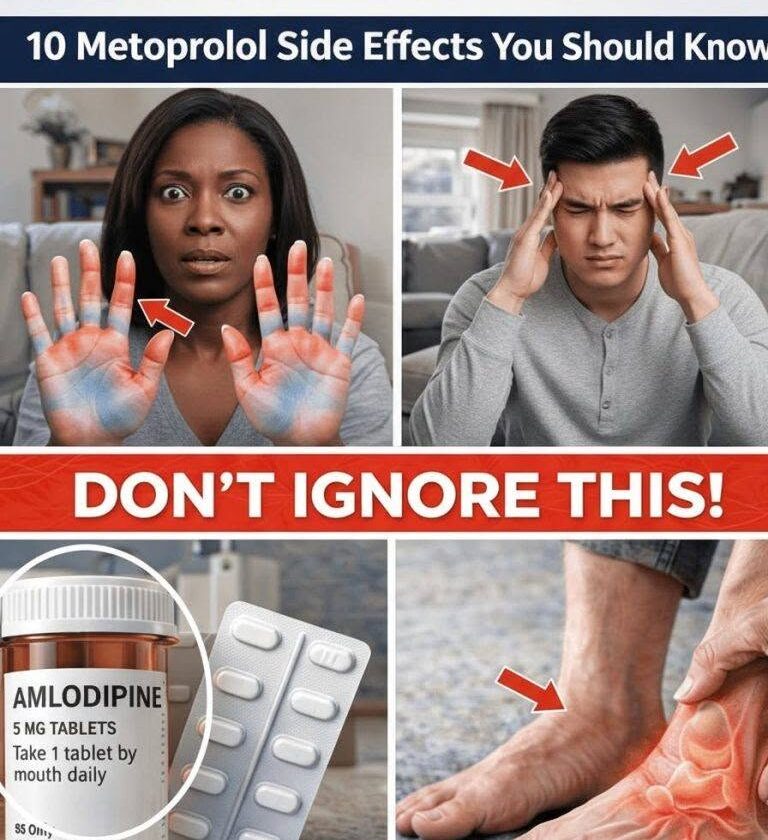
Tiredness or reduced energy
Dizziness or lightheadedness
Slow heartbeat (bradycardia)
Low blood pressure
Shortness of breath or wheezing
Cold hands and feet
Diarrhea or other digestive symptoms
Sleep problems, nightmares, or headaches
Depression, confusion, or short-term memory problems — these have been reported, although they aren’t among the most common effects.
D
DailyMed
+1
Swelling or worsening heart-failure symptoms — swelling of the legs, sudden weight gain, or increasing breathlessness needs medical attention.
M
MedlinePlus
How to manage side effects
Take metoprolol exactly as prescribed and don’t stop it suddenly. Abrupt withdrawal can cause serious heart problems, including worsening chest pain or other cardiac complications.
M
MedlinePlus
+1
If dizziness occurs, rise slowly from sitting or lying down and discuss persistent symptoms with your clinician. Your doctor may need to check your blood pressure and heart rate or adjust the dose.
If you have diabetes, remember that metoprolol can mask some warning symptoms of low blood sugar, so glucose monitoring is particularly important.
M
MedlinePlus
When to seek urgent help
Get urgent medical attention for fainting, severe difficulty breathing, significant swelling, sudden weight gain, or a rapid/pounding/irregular heartbeat.
M
MedlinePlus
Also tell your doctor or pharmacist about all your other medicines. Some drugs—including certain heart medicines—can increase the risk of an excessively slow heart rate when combined with metoprolol.
D
DailyMed
Important: Metoprolol comes in different forms, particularly metoprolol tartrate and metoprolol succinate, and the appropriate dosing schedule differs. Don’t change your dose based on an online side-effect list.
M
D
Sources