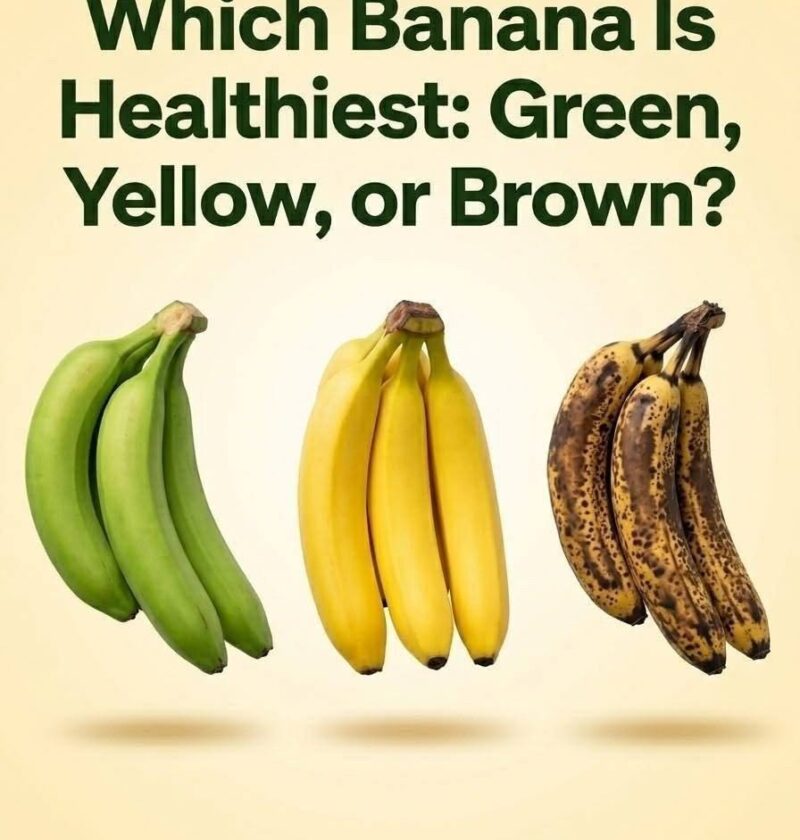
When it comes to bananas, there is no single “healthiest” one overall. Instead, the nutritional profile of a banana changes dramatically as it ripens. Which stage is best depends entirely on your personal health goals, digestive needs, and dietary preferences.
1. Underripe (Green to Firm Yellow-Green)
-
The Profile: High in starch, lower in sugar.
-
The Secret Weapon: Resistant starch. This acts like dietary fiber rather than a simple sugar. Because it isn’t broken down easily in the small intestine, it feeds beneficial gut bacteria (acting as a prebiotic) and slows down digestion.
-
Best For:
-
Blood sugar management: They have a lower glycemic index and cause a much slower, steadier rise in blood sugar.
-
Weight management: The high fiber and resistant starch content promote a feeling of fullness.
-
Drawback: They can taste firm, chalky, and slightly bitter, and they are harder to digest for some people.
-
2. Perfectly Ripe (Solid Yellow, No Brown Spots)
-
The Profile: Peak balance of micronutrients, antioxidants, and moderate sweetness.
-
The Secret Weapon: Maximum vitamins and minerals. A standard ripe banana is packed with potassium (vital for heart health and blood pressure), vitamin B6 (great for brain function and metabolism), and vitamin C.
-
Best For:
-
General everyday nutrition: This is the sweet spot for most healthy individuals looking for a balanced snack that provides steady energy.
-
Athletic performance: Easy to pack and quick to digest, making it a fantastic pre- or post-workout energy boost.
-
3. Very Ripe / Overripe (Yellow with Brown Spots to Mostly Brown)
-
The Profile: High sugar content, soft texture, and packed with antioxidants.
-
The Secret Weapon: Rapid digestibility and antioxidants. As the banana develops brown spots, its complex starches convert almost entirely into simple natural sugars (glucose, fructose, and sucrose), making it very easy on the stomach. The concentration of antioxidants also spikes as the fruit darkens.
-
Best For:
-
Quick energy or sensitive digestion: Ideal for athletes needing an instant energy spike or anyone with a sensitive stomach who struggles to digest raw starches.
-
Baking and blending: Perfect for natural sweetening in smoothies or oatmeal without needing added sugars.
-
Drawback: Not ideal for individuals with diabetes or those closely monitoring their blood sugar, as the higher sugar content leads to a faster glycemic response.
-
The Verdict
-
Choose a greenish-yellow banana if you are watching your blood sugar or want to support gut health.
-
Choose a spotty, ripe banana if you want maximum vitamins, antioxidants, and easy digestion.
Do you prefer your bananas slightly firm and green, or sweet and soft with brown spots?