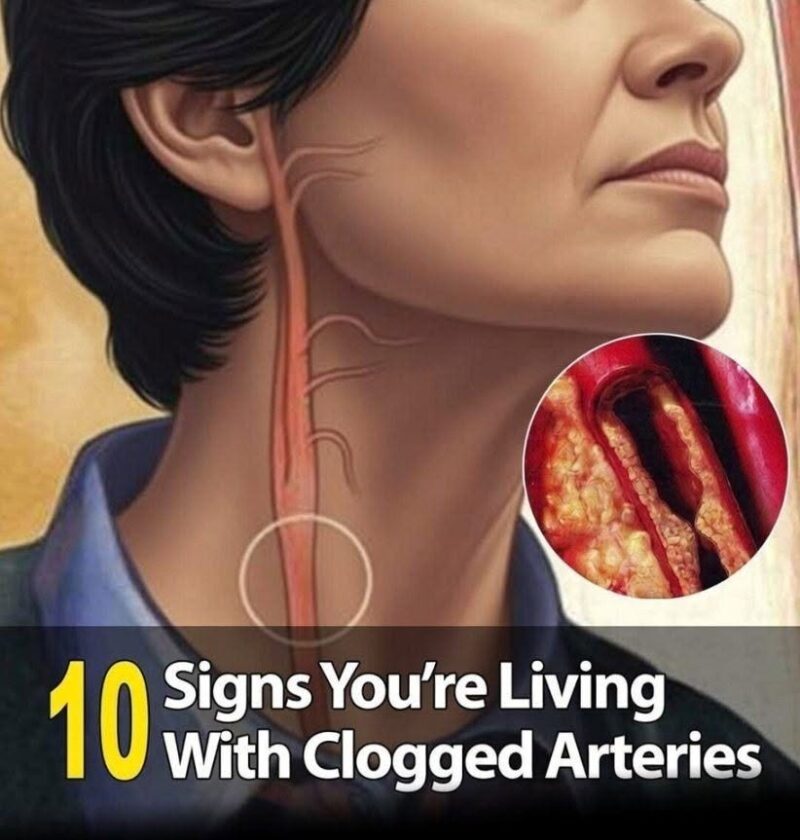
10 Indicators of Blocked Arteries You Shouldn’t Ignore
Atherosclerosis—plaque buildup inside arteries—can narrow or block blood vessels. It often causes no symptoms until blood flow is significantly reduced, so symptoms shouldn’t be used as a home test for “blocked arteries.”
M
Mayo Clinic
Here are 10 possible warning signs:
Chest pressure or pain — especially with exertion; this can occur when the heart isn’t getting enough blood.
Shortness of breath — particularly during activity or together with chest discomfort.
Pain or cramping in the legs while walking — typically improves after resting and can be a sign of peripheral artery disease (PAD).
W
www.heart.org
+1
Cold feet or legs — particularly when one side feels noticeably colder than the other.
Numbness or weakness in a leg or foot — reduced circulation can cause these symptoms.
M
Mayo Clinic
Slow-healing sores on the feet or legs — poor arterial blood flow can make wounds difficult to heal.
W
www.heart.org
Changes in skin color — a foot or leg may appear unusually pale, bluish, or reddish depending on blood flow and position.
Loss of hair on the legs or slow-growing toenails — these can occur with reduced circulation.
W
www.heart.org
+1
Erectile dysfunction — in some men, impaired blood flow can contribute to erectile problems.
M
Mayo Clinic
Sudden weakness, numbness, trouble speaking, facial drooping, or temporary loss of vision — these can indicate reduced blood flow to the brain, such as a TIA, and require urgent medical attention.
M
Mayo Clinic
🚨 When it’s an emergency
Don’t wait for a doctor’s appointment if you have sudden chest pressure/pain, severe shortness of breath, fainting, or symptoms suggesting a stroke such as facial drooping, sudden weakness/numbness, difficulty speaking, or sudden vision loss. Seek emergency medical care immediately.
M
Mayo Clinic
One important misconception
You cannot reliably tell whether an artery is blocked just by looking at your veins, skin, or feet. Some people with significant atherosclerosis have few or no symptoms. Doctors may use blood-pressure comparisons, an ankle-brachial index, ultrasound, CT angiography, or other tests depending on the suspected artery and symptoms.
W
www.heart.org
+1
Bottom line: Recurring leg pain when walking, unexplained circulation changes, chest discomfort, or neurological symptoms deserve medical evaluation—especially if you smoke, have diabetes, high blood pressure, high cholesterol, or a family history of cardiovascular disease.
W
www.heart.org
M
W
Sources