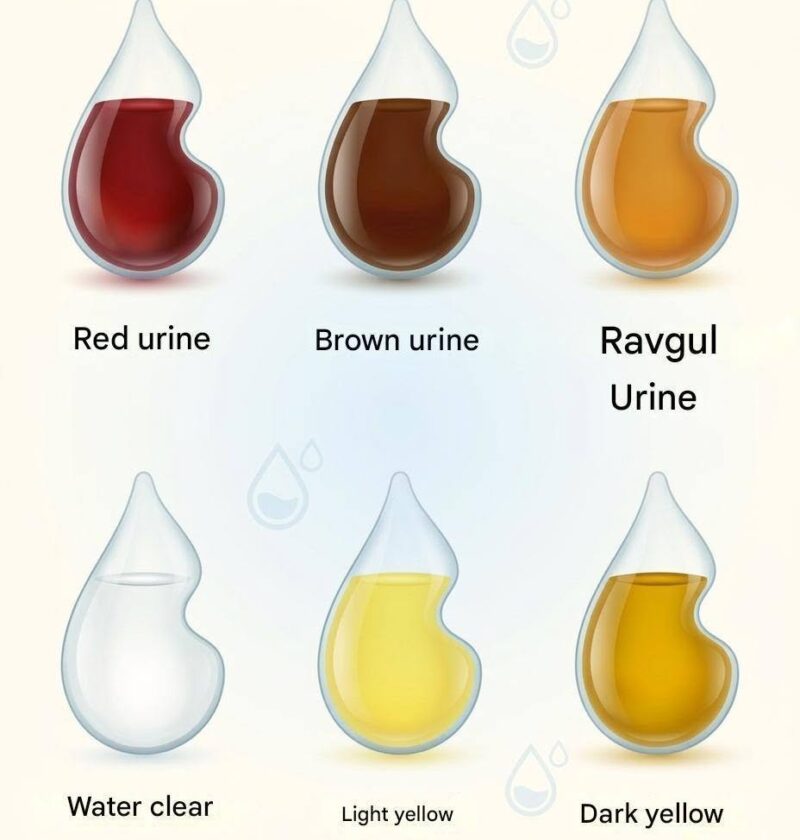
Urine color can provide clues about your hydration and, in some cases, your health. However, foods, medications, and vitamins can also change urine color, so color alone is not enough to diagnose a medical condition.
Here’s a general guide:
| Urine color | Possible meaning |
|---|---|
| Pale yellow to light straw | Usually indicates normal hydration. |
| Clear | You may be drinking more water than you need, though it’s not necessarily harmful. |
| Dark yellow or amber | Often a sign of dehydration. Drinking more fluids may help unless your doctor has advised fluid restriction. |
| Orange | Can result from dehydration, certain medications, or vitamin supplements. Rarely, it may indicate liver or bile duct problems, especially if accompanied by pale stools or yellowing of the skin or eyes. |
| Pink or red | May be caused by foods like beets or berries, but it can also indicate blood in the urine. Blood should always be evaluated by a healthcare professional. |
| Brown or tea-colored | May occur with severe dehydration, some medications, liver disease, or muscle injury. It should be evaluated, especially if persistent. |
| Blue or green | Usually caused by certain medications, dyes, or rarely, specific medical conditions. |
| Cloudy | Can occur with dehydration, crystals in the urine, or a Urinary tract infection, especially if accompanied by burning, fever, or urgency. |
When to seek medical advice
Contact a healthcare professional if you notice:
- Red or pink urine that isn’t explained by food or medication.
- Brown urine that persists.
- Cloudy urine with pain, burning, fever, or a strong odor.
- Persistent dark urine despite drinking enough fluids.
- Yellowing of the skin or eyes along with dark urine.
A few important notes
- Some vitamin supplements, especially B vitamins, can make urine appear bright yellow.
- Certain foods, such as beets, blackberries, and rhubarb, can temporarily change urine color.
- Aim for pale yellow urine most of the time. Clear urine all day isn’t necessary and may simply mean you’re drinking more water than your body needs.
If you notice a sudden, unexplained change in urine color that lasts more than a day or two, or it’s accompanied by pain, fever, or other symptoms, it’s a good idea to seek medical evaluation.