The “3 Things to Avoid” After Meals and “4 Bedtime Habits to Skip” — What Actually Matters for Stroke Risk
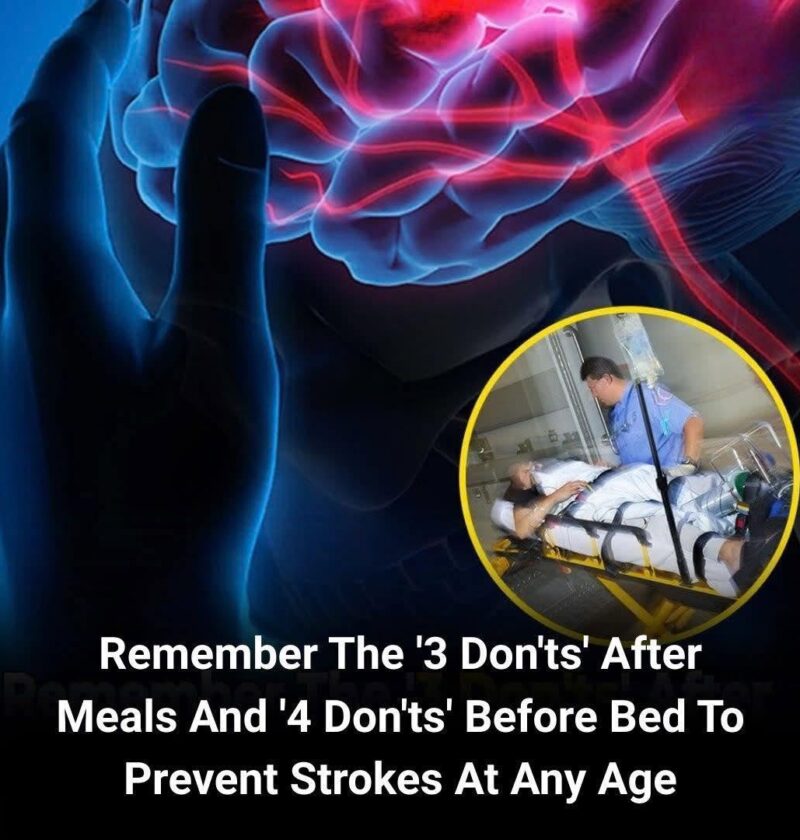
There is no medically proven list of three things you must avoid after every meal and four things you must never do before bed to prevent stroke.
However, some everyday habits can influence important stroke risk factors—especially high blood pressure, diabetes, cholesterol, obesity, smoking, alcohol use, and physical inactivity. Many strokes can be prevented by addressing these factors.
C
CDC
+1
3 habits to avoid after meals
1. 🚶 Don’t become completely sedentary
A short, comfortable walk after eating can be a useful way to incorporate physical activity into your day. Regular activity helps control blood pressure, cholesterol, weight, and blood sugar—all relevant to stroke prevention.
C
CDC
You don’t need an intense workout immediately after eating. Gentle movement is enough.
2. 🧂 Don’t routinely choose very salty foods
The issue isn’t that salt immediately causes a stroke after a meal. Rather, regularly consuming too much sodium can raise blood pressure, which is the most important modifiable risk factor for stroke.
W
www.stroke.org
+1
Limit heavily salted and highly processed foods, and choose more vegetables, fruits, whole grains, beans, nuts, and other minimally processed foods.
W
www.stroke.org
3. 🚬 Don’t smoke after eating—or at any other time
Smoking damages blood vessels and substantially increases stroke risk. Quitting is one of the most valuable changes you can make for cardiovascular health.
C
CDC
+1
4 bedtime habits worth reconsidering
1. 📱 Don’t sacrifice sleep for screens
Adults generally benefit from 7–9 hours of sleep per night. Poor sleep can contribute to cardiovascular risk, while maintaining a consistent bedtime routine can support healthier sleep.
W
www.stroke.org
+1
2. 🍺 Don’t regularly drink excessive alcohol before bed
Alcohol can raise blood pressure, and excessive alcohol consumption increases stroke risk. If you drink, staying within recommended limits is important; drinking less is also reasonable.
C
CDC
3. 🍔 Don’t make very large, unhealthy late-night meals a routine
A single late meal doesn’t cause a stroke. The bigger concern is an overall dietary pattern high in sodium, saturated fat, added sugars, and highly processed foods, which can contribute to conditions that increase stroke risk.
C
CDC
+1
4. 💊 Don’t skip prescribed medications
If you take medication for high blood pressure, cholesterol, diabetes, atrial fibrillation, or another cardiovascular condition, take it exactly as prescribed. Don’t stop or change your dose because you’re feeling well.
C
CDC
+1
What matters much more than these “7 rules”
For genuine stroke prevention, focus on the big risk factors:
Know and control your blood pressure.
Don’t smoke.
Exercise regularly—about 150 minutes of moderate activity per week is a common target for adults.
Eat a heart-healthy diet that’s lower in sodium and saturated fat and rich in vegetables, fruits, whole grains, beans, and healthy protein.
Maintain a healthy weight.
Control diabetes and cholesterol.
Limit alcohol.
Get adequate sleep.
Take prescribed medications consistently.
C
CDC
+1
🚨 Know the emergency signs
If someone suddenly develops facial drooping, weakness or numbness (especially on one side), difficulty speaking, confusion, trouble seeing, severe dizziness, or difficulty walking, treat it as a possible stroke and seek emergency medical help immediately. Don’t wait for the symptoms to disappear.
Bottom line: There isn’t a magic “3 after meals + 4 before bed” formula. The most effective stroke prevention comes from consistently controlling blood pressure and other cardiovascular risk factors rather than avoiding a few specific post-meal or bedtime activities.