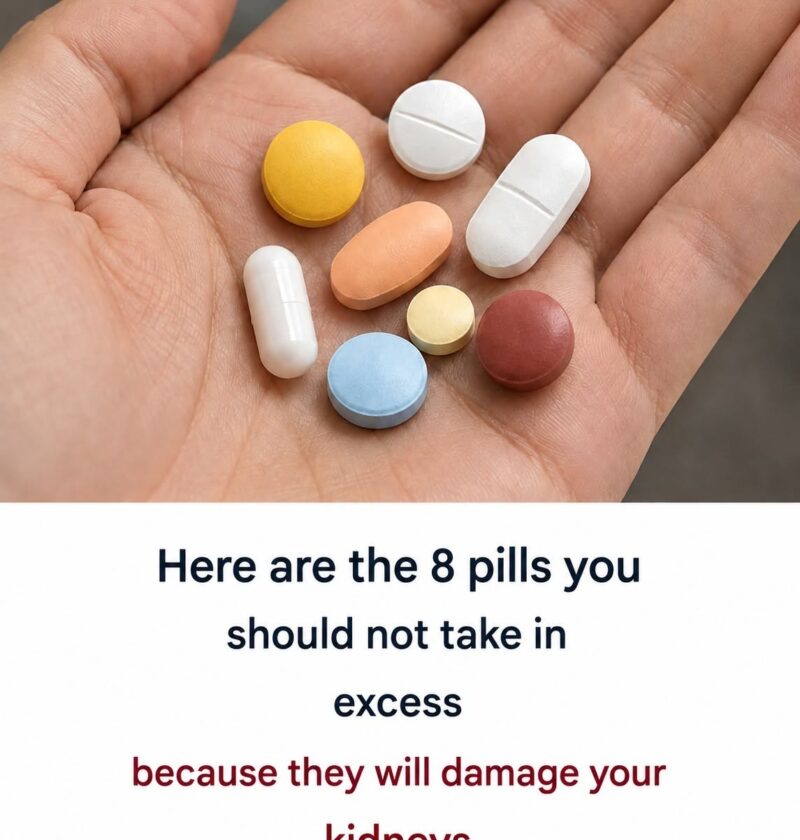
The headline “Eight pills you shouldn’t take because they damage your kidneys” is misleading. There isn’t a universal list of eight medications that everyone should avoid. Many medicines can be used safely when appropriately prescribed, while the risk depends on the drug, dose, duration, kidney function, hydration, and other medications.
Medicines that deserve particular kidney-related caution
Ibuprofen — an NSAID that can reduce blood flow to the kidneys and trigger acute kidney injury, especially at high doses, with prolonged use, or in people with kidney disease.
N
National Kidney Foundation
+1
Naproxen — another NSAID with similar kidney risks.
N
National Kidney Foundation
Diclofenac tablets/capsules — an NSAID that can be harmful to kidney function, particularly with long-term or high-dose use.
N
National Kidney Foundation
Meloxicam — another NSAID requiring caution in people with reduced kidney function.
N
National Kidney Foundation
Indomethacin — an NSAID that can reduce kidney blood flow and contribute to kidney injury.
N
National Kidney Foundation
Ketorolac — a potent NSAID generally intended for short-term use and requiring particular caution because of kidney-related adverse effects.
N
National Kidney Foundation
High-dose aspirin — aspirin above about 325 mg/day can act like an NSAID from a kidney perspective. Low-dose aspirin prescribed for cardiovascular protection is different and shouldn’t be stopped without medical advice.
N
National Kidney Foundation
Lithium — long-term treatment can affect kidney function and requires monitoring of kidney function and lithium levels.
N
National Kidney Foundation
One important misconception
ACE inhibitors and ARBs are not simply “kidney-damaging drugs.” They can actually protect the kidneys and heart in many people with kidney disease. However, the risk of acute kidney injury can increase when they are combined with an NSAID and a diuretic, particularly during dehydration.
N
National Kidney Foundation
Likewise, many antibiotics, antifungals and antivirals can require dose adjustment according to kidney function, but that doesn’t mean you should avoid them when you have an infection.
N
National Kidney Foundation
Don’t stop a prescribed medication on your own. If you have chronic kidney disease, diabetes, high blood pressure, heart failure, or take several medications, have your complete medication list—including over-the-counter drugs and supplements—reviewed by your doctor or pharmacist.
N
NIDDK
+1
A more accurate headline would be: “8 Medicines That Can Harm the Kidneys in Certain Situations—and How to Use Them Safely.”
N
N
Sources