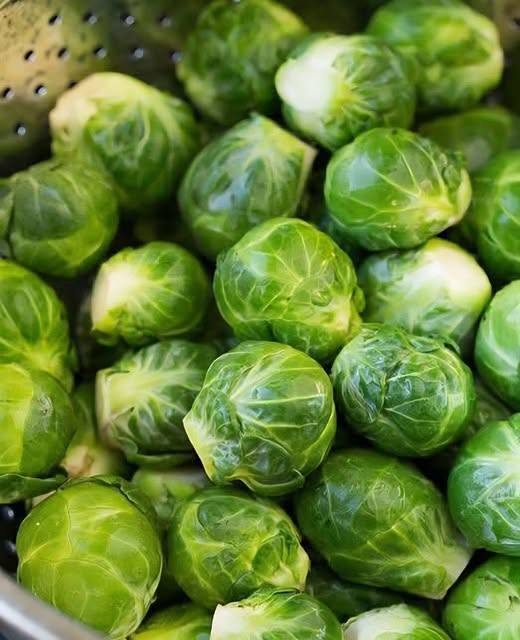
Historically, Brussels sprouts developed a strong negative reputation in many households, especially in the 20th century. This was largely due to common cooking methods at the time. Boiling or overcooking the sprouts tends to release sulfur compounds, which produce a strong smell and a bitter taste. As a result, many people associated Brussels sprouts with unpleasant childhood meals and developed a long-lasting dislike for them.
In recent years, however, Brussels sprouts have experienced a significant change in public perception. This shift is mainly due to improvements in cooking techniques and changes in modern cuisine. Instead of boiling, chefs and home cooks now commonly roast, sauté, grill, or air-fry Brussels sprouts. These methods bring out a sweeter, nutty flavor and create a crispy texture on the outside while keeping the inside tender. Ingredients such as olive oil, garlic, lemon juice, parmesan cheese, bacon, or balsamic vinegar are often added to enhance the taste.
Nutritionally, Brussels sprouts are considered highly beneficial. They are low in calories and rich in fiber, vitamin C, vitamin K, and antioxidants. They also contain compounds that may support heart health and help reduce inflammation. Because of this nutritional profile, they are often included in healthy diet plans.
Today, Brussels sprouts are no longer seen only as a disliked vegetable. In many restaurants around the world, especially in Europe and North America, roasted Brussels sprouts are a popular side dish. They are frequently featured on modern menus and are often recommended even to people who previously avoided them.
Despite this improvement in reputation, not everyone enjoys Brussels sprouts. Taste preferences still vary, and some people remain sensitive to their natural bitterness. However, the number of people who enjoy them has increased significantly compared to previous generations.
In summary, Brussels sprouts are widely eaten today, but their popularity depends largely on preparation methods and personal taste. Proper cooking techniques have transformed them from one of the most disliked vegetables into a commonly enjoyed and nutritious food.