Here’s the real, medically grounded picture:
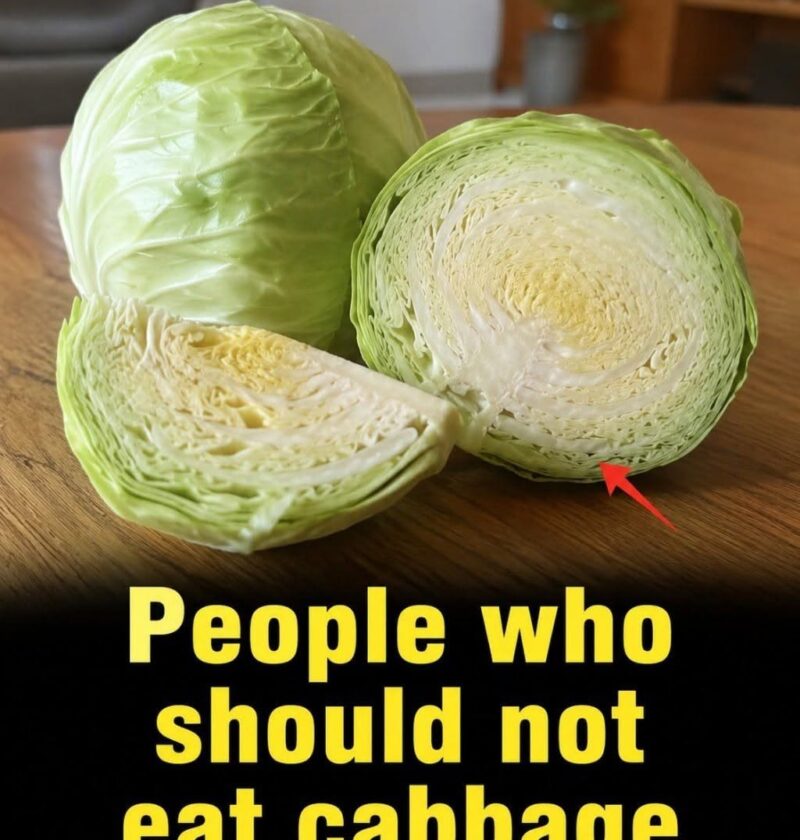
🥬 Who should be cautious with cabbage
1. People with thyroid problems (especially iodine deficiency)
Cabbage is a cruciferous vegetable and contains compounds called goitrogens.
- In very large amounts, especially raw, it may interfere with iodine use in the thyroid.
- This is mainly a concern if iodine intake is already low.
👉 In normal cooked portions, cabbage is generally safe.
2. People with IBS or sensitive digestion
Cabbage can cause:
- Gas
- Bloating
- Abdominal discomfort
This is due to fermentable carbohydrates (FODMAPs).
👉 Cooking it well usually reduces symptoms.
3. People prone to kidney stones (oxalate sensitivity)
Cabbage is not high in oxalates, but some people on strict kidney stone diets may still be advised to balance intake with other vegetables.
4. People taking blood thinners (like warfarin)
Cabbage contains vitamin K, which affects blood clotting.
👉 The issue is not eating it—it’s sudden changes in amount, which can interfere with medication dosing.
🥬 Who should NOT worry
Most people:
- Healthy adults
- Children
- Pregnant women (in normal food amounts)
can safely eat cabbage regularly.
It’s actually beneficial because it contains:
- Vitamin C
- Fiber
- Antioxidants
- Gut-supporting compounds
⚠️ Bottom line
No healthy group needs to “absolutely avoid” cabbage. The real issue is individual medical conditions + quantity + consistency, not the food itself.
If you want, I can also explain the “top 5 healthiest ways to cook cabbage” or whether raw vs cooked cabbage is better for you specifically.