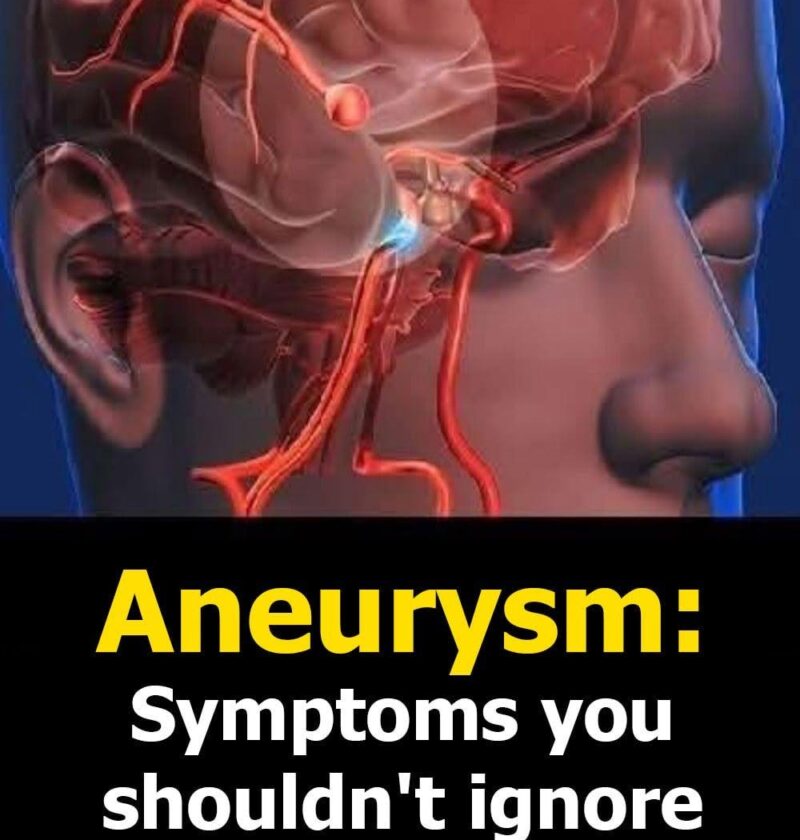
That headline is clickbait—but the topic is serious. An aneurysm is a bulging or ballooning of a blood vessel that can become dangerous if it ruptures.
The key is that many aneurysms cause no symptoms until they become large or rupture, which is why warning signs matter.
🧠 What is an aneurysm?
An aneurysm is a weakened area in an artery wall that can expand like a balloon. Common types include:
- Brain (cerebral) aneurysm
- Aortic aneurysm (main body artery)
🚨 Warning signs you should NOT ignore
🧠 Possible brain aneurysm signs
Brain aneurysm
- Sudden, severe “worst headache of your life”
- Blurred or double vision
- Drooping eyelid
- Pain above or behind the eye
- Numbness or weakness in the face
- Difficulty speaking
- Loss of consciousness (in severe cases)
👉 A ruptured brain aneurysm can lead to a hemorrhagic stroke, which is a medical emergency.
❤️ Possible aortic aneurysm signs
Aortic aneurysm
- Deep, constant pain in chest, back, or abdomen
- Pulsating feeling in the abdomen
- Sudden severe tearing pain (may indicate rupture)
- Shortness of breath
- Low blood pressure, dizziness, fainting (emergency signs)
⚠️ Emergency warning (very important)
Call emergency services immediately if someone has:
- Sudden severe headache + collapse
- Sudden chest/back tearing pain
- Loss of consciousness
- Stroke-like symptoms
🧠 Risk factors
- High blood pressure
- Smoking
Connection interrupted