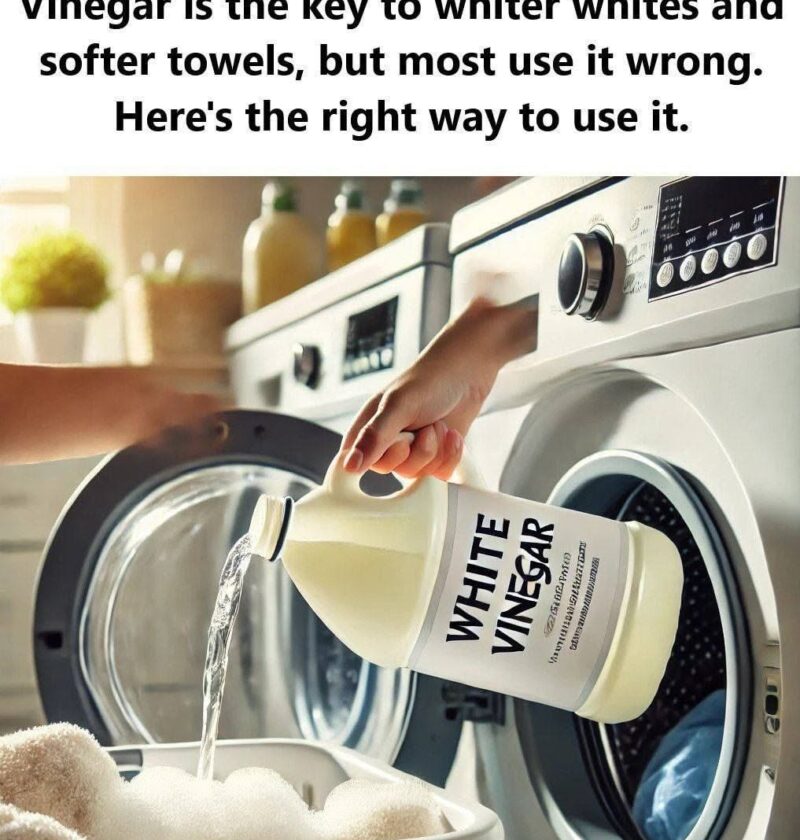
That claim is partly true but exaggerated. Vinegar can help laundry in some situations, but it’s not a “whitening miracle,” and using it incorrectly can reduce detergent effectiveness or even damage fabrics over time.
The key ingredient here is white vinegar, which is diluted acetic acid.
🧺 What vinegar actually does in laundry
Vinegar can:
- Break down detergent residue
- Soften towels and fabrics
- Reduce musty odors
- Help remove light mineral buildup from hard water
But it does NOT bleach or deeply whiten fabrics like chlorine or oxygen bleach.
👕 The “right way” to use vinegar
✔️ 1. As a fabric softener (best use)
- Add ½ cup white vinegar in the fabric softener compartment
- Works especially well for towels and gym clothes
✔️ 2. For odor removal
- Soak clothes in warm water + 1 cup vinegar for 30–60 minutes
- Then wash normally
✔️ 3. For hard water buildup
- Add vinegar during rinse cycle occasionally (not every wash)
⚠️ Common mistakes people make
❌ Mixing vinegar with bleach
This creates toxic chlorine gas—dangerous.
❌ Using too much vinegar every wash
Can slowly weaken rubber seals in washing machines over time.
❌ Expecting strong whitening
Vinegar does NOT remove deep stains or yellowing.
🧠 Real truth about “whiter whites”
For truly bright whites, you need:
- Good detergent
- Oxygen-based bleach (occasionally)
- Sunlight drying
- Proper washing temperature
Vinegar helps clean buildup, not “whiten fabric color.”
🧺 Bottom line
- Vinegar = great natural cleaner and softener
- Not a bleach or stain remover
- Works best as a support tool, not a main solution
If you want, I can show you a full laundry routine to restore yellowed white clothes safely or a cheap detergent + booster combo used in professional laundry cleaning.