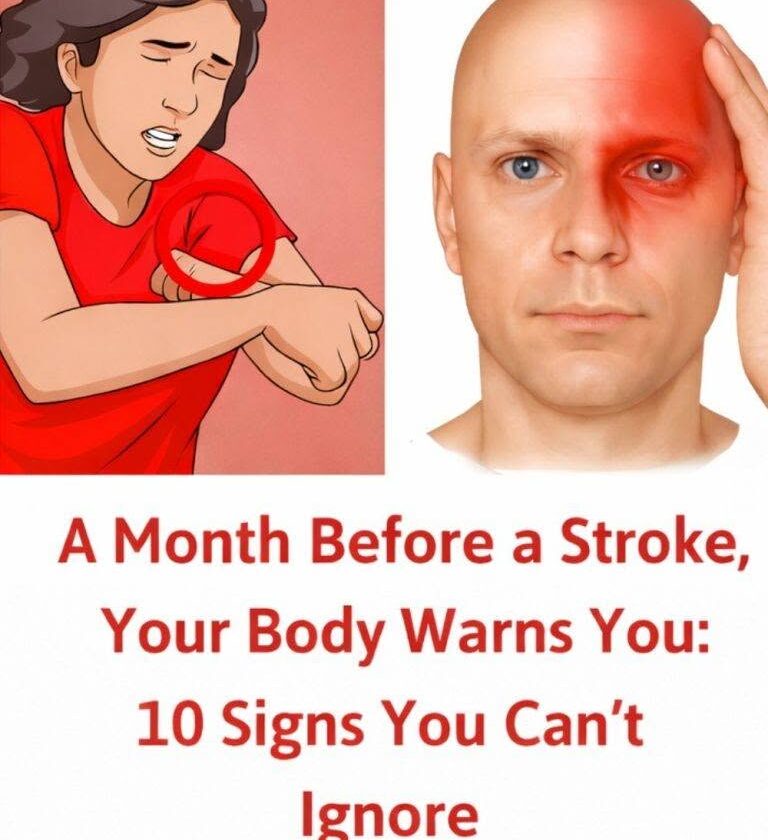
The idea that “your body warns you a month before a stroke” is a popular claim online, but it can be misleading. Strokes usually happen suddenly, and there is no guaranteed set of symptoms that appears exactly one month beforehand. However, some warning signs—especially those of a transient ischemic attack (TIA), sometimes called a “mini-stroke”—can occur before a major stroke and should be taken seriously.
10 warning signs you should not ignore:
- Sudden weakness or numbness
- Especially on one side of the face, arm, or leg.
- Face drooping
- One side of the face may feel weak or look uneven when smiling.
- Speech problems
- Slurred speech, trouble finding words, or difficulty understanding others.
- Sudden vision changes
- Blurred vision, loss of vision in one eye, or double vision.
- Sudden severe headache
- A “worst headache of your life,” especially if it comes with other symptoms.
- Dizziness or loss of balance
- Trouble walking, coordination problems, or feeling unusually unsteady.
- Confusion
- Sudden difficulty thinking clearly or becoming disoriented.
- Trouble swallowing
- New difficulty swallowing can sometimes be a neurological warning sign.
- Temporary symptoms that disappear
- Stroke-like symptoms that resolve after minutes or hours can still be a TIA and need urgent medical evaluation.
- Sudden unusual fatigue or weakness
- Especially if it is new and unexplained, though fatigue alone is not a specific stroke sign.
Remember the FAST warning test:
- F — Face: Is one side drooping?
- A — Arms: Can both arms be raised normally?
- S — Speech: Is speech strange or unclear?
- T — Time: Seek emergency help immediately if any of these occur.
If someone has sudden stroke symptoms, do not wait to see if they improve—urgent medical care can reduce the risk of permanent damage.