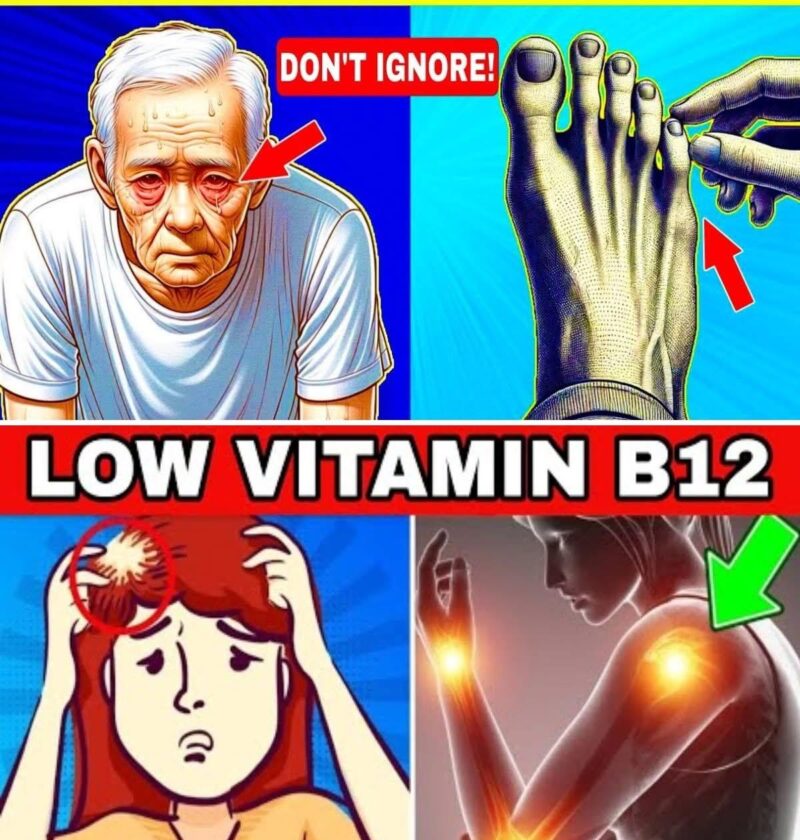
Vitamin B12 is important for red blood cell production, nerve function, DNA synthesis, and energy metabolism. A deficiency can develop slowly, and symptoms may be easy to overlook. Here are some possible hidden signs:
9 Signs Your Body May Need More Vitamin B12
- Persistent tiredness or weakness
- Feeling unusually exhausted, low on energy, or weak can occur when B12 deficiency affects red blood cell production.
- Tingling or numbness in hands and feet
- B12 helps maintain healthy nerves. A deficiency can cause “pins and needles,” burning sensations, or reduced sensation.
- Brain fog or difficulty concentrating
- Some people experience memory problems, confusion, or trouble focusing.
- Pale or yellowish skin
- Low B12 can contribute to anemia, which may make skin look paler. In some cases, it can cause a mild yellow tint due to changes in red blood cells.
- Mood changes
- Irritability, low mood, or symptoms resembling depression can sometimes be associated with B12 deficiency.
- A swollen or sore tongue
- A smooth, red, painful tongue (sometimes called glossitis) can be a sign of low B12.
- Balance problems
- Nerve-related effects of deficiency may affect coordination and stability.
- Changes in vision
- Rarely, nerve damage related to severe B12 deficiency can affect vision.
- Shortness of breath or dizziness
- If B12 deficiency causes anemia, reduced oxygen delivery can lead to breathlessness, lightheadedness, or a racing heartbeat.
Who is more at risk?
- Older adults
- People following strict vegan diets (B12 is mainly found in animal foods unless fortified)
- People with certain digestive conditions or surgeries affecting absorption
- People taking some long-term medications that affect B12 absorption (such as certain acid-reducing medicines or metformin)
How to check your B12 status
A blood test can measure vitamin B12 levels, and a healthcare professional may recommend additional tests if results are unclear. Avoid taking high-dose supplements long-term without guidance, especially if you have medical conditions or take medications.
If you’re experiencing symptoms, the pattern matters: one symptom alone does not confirm B12 deficiency, but several together may be worth discussing with a clinician.