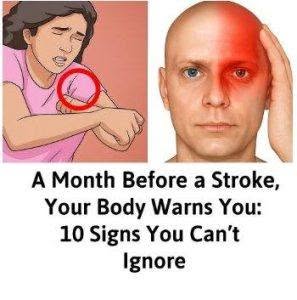
A headline like “Your body warns you one month before a stroke” can be misleading. Some people do experience warning signs before a stroke, especially a transient ischemic attack (TIA or “mini-stroke”), but strokes can also happen without any advance warning.
Possible warning signs that should never be ignored include:
- Sudden weakness or numbness
- Especially on one side of the face, arm, or leg.
- Sudden trouble speaking or understanding speech
- Slurred speech, confusion, or difficulty finding words.
- Sudden vision changes
- Blurred vision, loss of vision, or double vision in one or both eyes.
- Sudden severe headache
- Especially a “worst headache of your life” or one that appears without a clear cause.
- Sudden dizziness, loss of balance, or trouble walking
- Difficulty coordinating movements or feeling unsteady.
- Face drooping
- One side of the face may feel weak or appear uneven.
- Sudden confusion
- Trouble understanding what is happening or where you are.
- Temporary symptoms that go away
- Brief episodes of weakness, speech problems, or vision loss can be a TIA and still require urgent evaluation.
- New trouble swallowing
- Especially when combined with other neurological symptoms.
- Unusual loss of coordination
- Difficulty using an arm or performing familiar movements.
Remember FAST:
- F — Face drooping
- A — Arm weakness
- S — Speech difficulty
- T — Time to call emergency services
If these symptoms appear suddenly—even if they disappear after a few minutes—seek urgent medical help. Rapid treatment can greatly affect stroke outcomes.
Risk reduction includes controlling blood pressure, cholesterol, diabetes, smoking, and heart conditions, along with regular physical activity and a balanced diet.