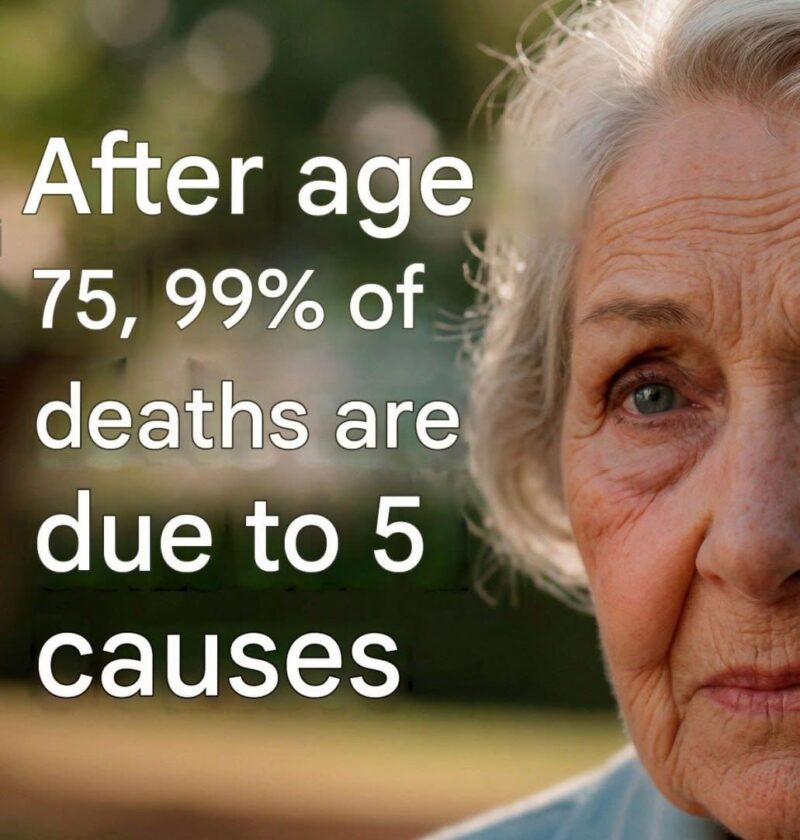
After age 75, the risk of certain health problems increases, but many older adults can remain active and independent by focusing on prevention. The idea that “99% of deaths after 75 come from exactly five causes” is an oversimplification—death rates vary by country, sex, genetics, and lifestyle. However, several major causes of death in older adults are consistently among the most common.
1. Heart disease (heart attacks and related conditions)
Why it happens: Blood vessels can become narrowed or damaged over time, increasing the risk of heart attacks and heart failure.
How to reduce risk:
- Keep blood pressure, cholesterol, and blood sugar under control
- Stay physically active (walking, strength exercises, balance exercises)
- Eat more vegetables, fruits, whole grains, fish, and healthy fats
- Avoid smoking
- Take prescribed medications as directed
2. Stroke
Why it happens: A blocked or bleeding blood vessel in the brain can damage brain tissue.
How to reduce risk:
- Control high blood pressure (one of the biggest risk factors)
- Manage diabetes if present
- Stay active and maintain a healthy weight
- Follow medical advice about cholesterol and heart rhythm problems such as atrial fibrillation
3. Cancer
Why it happens: The chance of cancer increases with age due to accumulated genetic changes.
How to reduce risk:
- Avoid tobacco
- Maintain a healthy weight
- Limit alcohol
- Get age-appropriate cancer screenings recommended by a healthcare professional
- Protect skin from excessive sun exposure
4. Respiratory diseases (such as chronic lung disease and pneumonia)
Why it happens: Lung function can decline with age, and infections may become more serious.
How to reduce risk:
- Do not smoke; avoid secondhand smoke
- Stay active to maintain lung capacity
- Keep vaccinations up to date (such as influenza, COVID-19, and others recommended for your age and health status)
- Seek treatment early for breathing problems or infections
5. Falls and complications from injuries
Why it matters: Falls can lead to fractures, loss of independence, and serious complications in older adults.
How to reduce risk:
- Do strength and balance exercises
- Keep homes well-lit and remove tripping hazards
- Review medications with a healthcare professional if dizziness or drowsiness occurs
- Have vision and hearing checked regularly