After 75: 5 major health threats—and how to reduce your risk
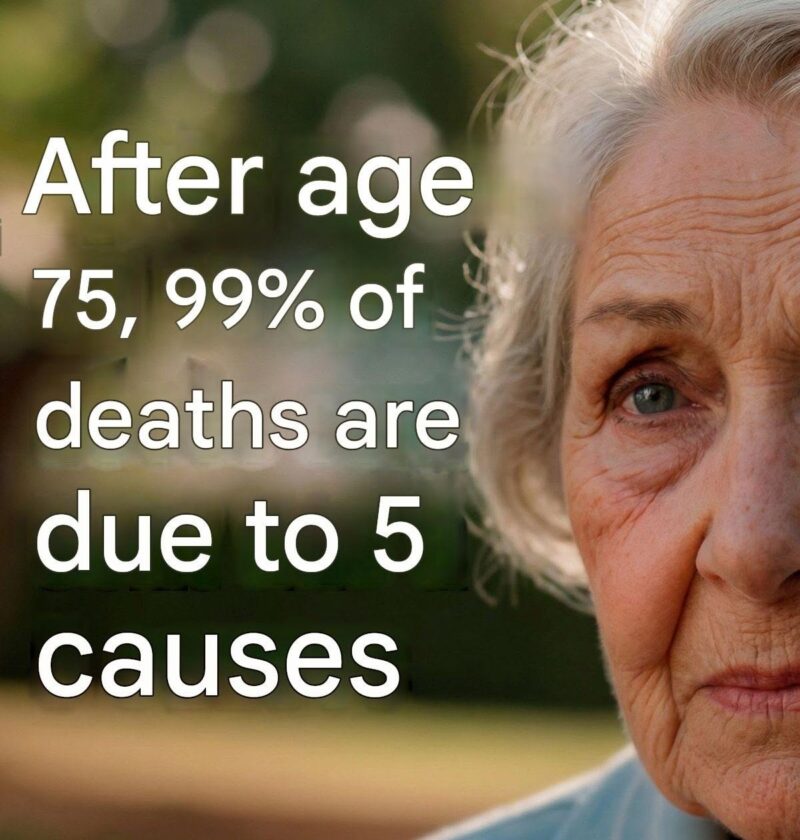
The headline “After age 75, these 5 conditions are major causes of death” needs some context. There isn’t a universal cutoff at 75, and individual risk varies greatly. In U.S. data for adults 65+, the leading causes include heart disease, cancer, stroke, chronic lower-respiratory disease, and Alzheimer’s disease.
C
CDC
+1
1. ❤️ Heart disease
Reduce risk: Keep blood pressure and cholesterol controlled, don’t smoke, stay physically active, maintain a healthy diet, and take prescribed medications consistently.
2. 🎗️ Cancer
Reduce risk: Don’t smoke, limit alcohol, maintain a healthy weight, stay active, and keep up with age- and risk-appropriate cancer screening recommended by your clinician.
3. 🧠 Stroke
Reduce risk: Blood-pressure control is particularly important. Also manage cholesterol and diabetes, don’t smoke, stay active, and take prescribed cardiovascular medicines as directed.
4. 🫁 Chronic respiratory disease
Conditions such as COPD can become especially serious later in life. Avoid smoking and secondhand smoke, stay appropriately vaccinated, and have persistent cough or breathlessness evaluated rather than assuming it’s simply aging.
5. 🧠 Alzheimer’s disease and other dementias
There is no guaranteed way to prevent dementia, but physical activity, cardiovascular risk-factor control, adequate sleep, social engagement, and managing chronic diseases are all sensible components of healthy aging.
C
CDC
+1
The often-overlooked risk: falls
Falls aren’t a disease, but unintentional injuries are a major cause of death among older adults. In 2024, unintentional injuries accounted for 75,699 deaths among Americans 65+.
C
CDC
Regular strength and balance exercises, removing trip hazards, reviewing medications that cause dizziness or drowsiness, and checking vision can help reduce fall risk. Adults 65+ are advised to include aerobic, muscle-strengthening, and balance activities each week.
C
CDC
A simple healthy-aging checklist
Walk or perform other appropriate aerobic activity regularly.
Do strength exercises at least twice a week.
Include balance exercises.
Don’t smoke.
Eat a varied, nutritious diet.
Keep blood pressure, cholesterol, and blood sugar under control.
Keep recommended vaccinations and screenings up to date.
Review medications regularly with a doctor or pharmacist.
Maintain social connections and mentally stimulating activities.
C
CDC
+1
Bottom line: Being over 75 doesn’t mean serious illness is inevitable. Many of the biggest risks can be reduced or managed, and it’s never too late to benefit from healthier habits.
C
CDC
C
C
Sources