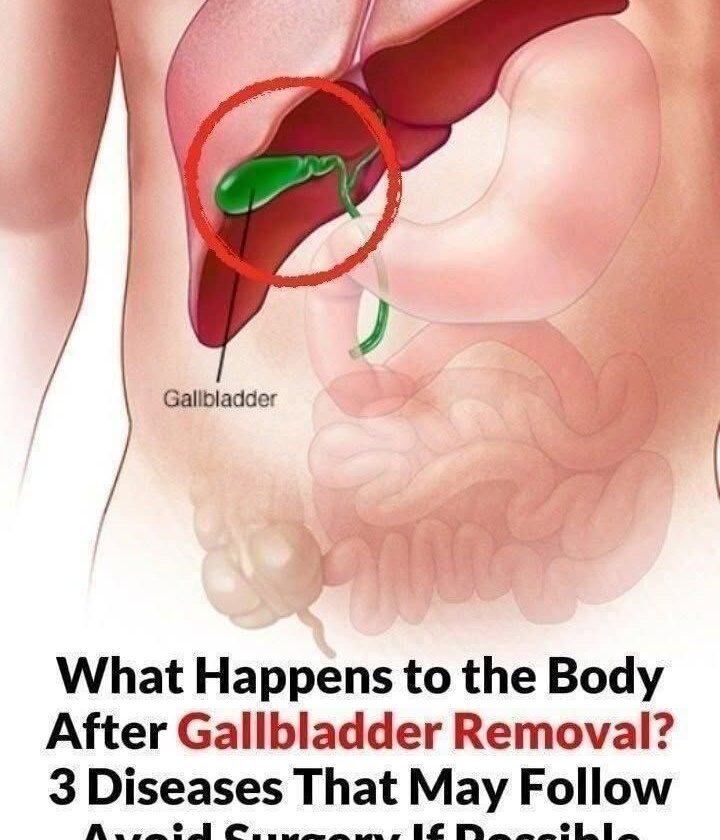
The claim “After gallbladder removal: 3 conditions you could develop — why you should avoid the surgery when possible” is a common type of health headline, but it needs context. Gallbladder removal (cholecystectomy) is generally considered a safe and effective treatment when medically indicated, especially for problems such as repeated gallstone attacks, gallbladder inflammation, or certain complications. Avoiding surgery when it is clearly needed can also carry risks.
Some changes or conditions that can occur after gallbladder removal include:
- Post-cholecystectomy digestive symptoms
- Some people develop diarrhea, bloating, gas, nausea, or discomfort after meals.
- This can happen because bile flows continuously into the intestine instead of being stored and released in larger amounts after meals.
- Bile acid diarrhea
- In some people, excess bile acids reach the colon and irritate it, causing frequent watery stools.
- This can often be treated with medications that bind bile acids.
- Changes in digestion of fatty foods
- Some people have difficulty tolerating large or high-fat meals and may need to adjust their diet.
- Many people, however, return to a normal diet over time.
Other issues sometimes discussed include changes in the gut microbiome or a slightly increased risk of certain digestive problems, but these are not reasons for most people to avoid a needed operation.
A decision about gallbladder removal usually depends on:
- whether symptoms are caused by gallstones or another gallbladder problem,
- frequency and severity of attacks,
- risk of complications (such as infection or pancreatitis),
- overall health and surgical risk.
If you are considering gallbladder surgery, it can help to discuss with a surgeon whether watchful waiting, dietary management, medication, or surgery is the most appropriate option for your specific situation.