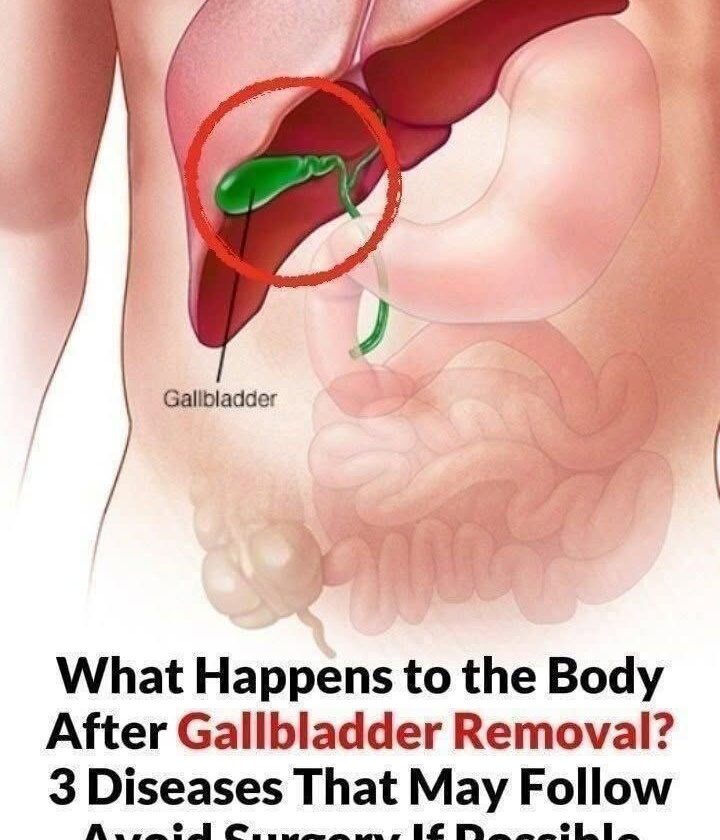
The headline “After Gallbladder Removal: 3 Conditions You Could Develop — Why You Should Avoid the Surgery When Possible” is misleading. Gallbladder removal has genuine risks and possible side effects, but there is no evidence that it routinely causes three specific diseases or that people who need the operation should avoid it.
What can actually happen after surgery?
Most people can live normally without a gallbladder because the liver continues producing bile; the bile simply flows directly into the intestine rather than being stored in the gallbladder. (nhs.uk)
Some people develop:
- Diarrhea or more frequent stools — usually temporary, although it can persist in some people. (nhs.uk)
- Indigestion, bloating, nausea, or abdominal pain — sometimes grouped under post-cholecystectomy syndrome. (nhs.uk)
- Rare surgical complications — including infection, bleeding, bile leakage, bile-duct injury, or blood clots. These are recognized risks, but gallbladder removal is generally considered a safe and common procedure. (nhs.uk)
Should you avoid the surgery?
Not if it is medically indicated.
People with gallstones that cause no symptoms often don’t need surgery. But recurrent painful attacks, gallbladder inflammation, bile-duct obstruction, jaundice, or gallstone-related pancreatitis can make removal the appropriate treatment. Untreated gallstones can themselves cause serious complications. (nhs.uk)
So the sensible message is:
Don’t have gallbladder surgery unnecessarily—but don’t avoid a recommended operation because of a viral “3 diseases” claim.
If you’re considering surgery, the decision depends heavily on why you need it. If you tell me what your ultrasound showed (for example, number/size of stones, gallbladder inflammation, bile-duct stones) and what symptoms you’re having, I can explain when surgery is usually recommended.