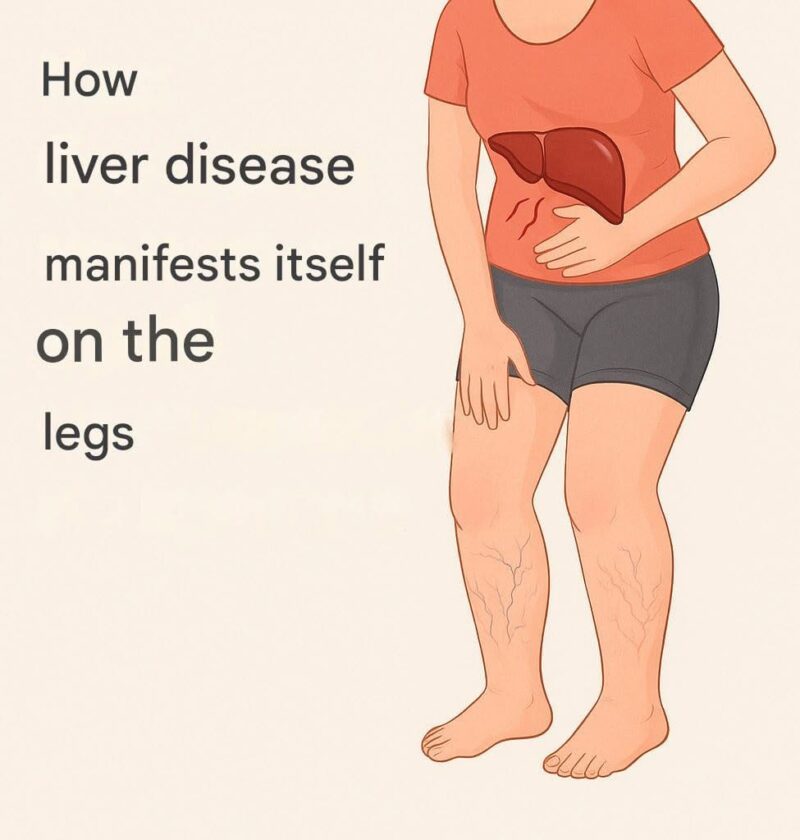
The headline “Your legs are screaming ‘HELP!’: 5 warning signs from your liver” is catchy, but it needs an important correction: leg symptoms alone cannot diagnose liver disease. Some leg changes can occur when advanced liver disease causes fluid retention or other complications, but there are many more common causes of leg problems.
🦵 5 leg-related signs that can occur with advanced liver disease
- Swollen ankles, feet, or lower legs
Fluid can accumulate in the tissues, producing edema. In cirrhosis, this can happen because of changes in blood flow and reduced levels of proteins such as albumin. (NIDDK) - Legs that become increasingly puffy
Persistent or worsening swelling can accompany advanced liver disease, particularly when cirrhosis has caused complications such as portal hypertension. (NIDDK) - Muscle loss or weakness
Advanced liver disease can be associated with loss of muscle mass and weakness. (NIDDK) - Muscle cramps
Cramps can occur in people with cirrhosis, although they are not specific to liver disease. (NIDDK) - Swelling accompanied by abdominal fluid buildup
If leg swelling occurs together with an increasingly swollen abdomen (ascites), jaundice, itching, or other symptoms, liver disease becomes more concerning. (NIDDK)
⚠️ Don’t assume swollen legs mean liver disease
Leg edema has many possible causes, including prolonged sitting or standing, excess salt, certain medications, varicose veins, thyroid problems, kidney disease, heart disease, and blood clots. (nhs.uk)
Also watch for other liver-related symptoms such as yellow eyes/skin, very itchy skin, dark urine, easy bruising or bleeding, abdominal swelling, unexplained weight loss, or confusion. (NIDDK)
Bottom line: swollen legs can be a sign of advanced liver disease, but your legs aren’t a reliable “liver test.” Persistent swelling should be evaluated rather than treated with a liver “detox” or supplement. A clinician can use examination, blood tests and, when appropriate, imaging to determine the cause. (NIDDK)
If leg swelling is sudden, severe, painful, one-sided, red/hot, or accompanied by shortness of breath or chest pain, seek urgent medical care because causes such as a blood clot can be emergencies. (nhs.uk)