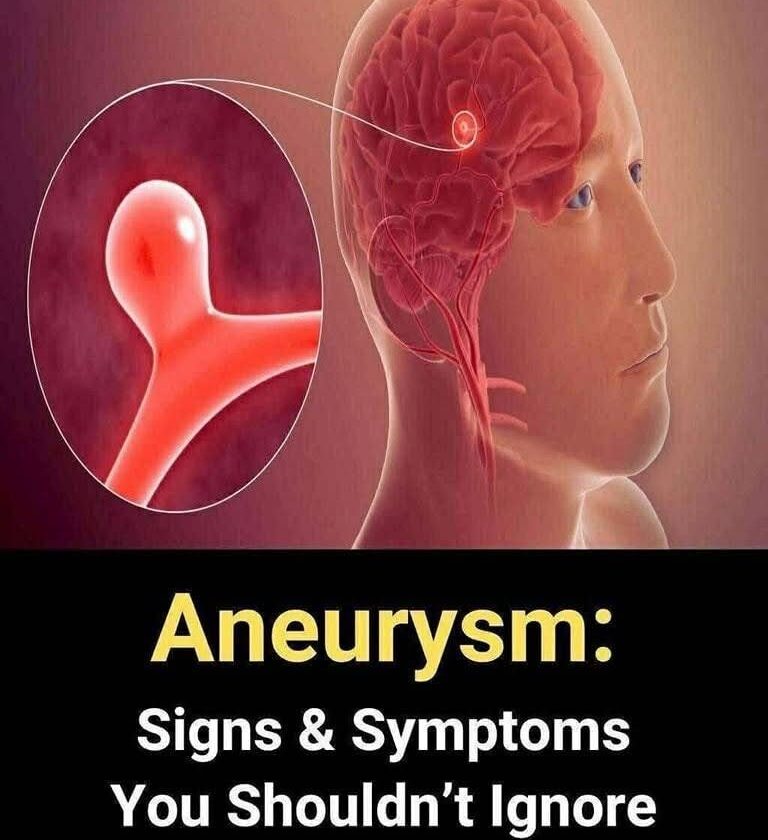
Aneurysm: Signs You Shouldn’t Ignore
An aneurysm is a weakened area of an artery that bulges outward. Many aneurysms cause no symptoms at all, which is why you shouldn’t rely on symptoms alone to detect one.
But when an aneurysm begins leaking or ruptures, it can become a life-threatening emergency.
🚨 Brain aneurysm warning signs
An unruptured brain aneurysm may sometimes cause:
A persistent or unusual headache
Pain around or behind one eye
Double or changed vision
Numbness or weakness on one side of the face
Difficulty speaking or concentrating
Seizures
However, many brain aneurysms cause no symptoms until they rupture.
⚡ The emergency warning sign
A ruptured brain aneurysm classically causes a sudden, extremely severe headache—often described as the worst headache someone has ever experienced.
It may also be accompanied by:
Nausea or vomiting
Stiff neck
Vision problems
Confusion
Seizures
Loss of consciousness
This is a medical emergency. Seek emergency medical care immediately.
🫀 Abdominal aortic aneurysm warning signs
An abdominal aortic aneurysm often has no symptoms.
When symptoms occur, they may include:
Persistent abdominal pain
Persistent or unusual lower-back pain
A pulsing sensation in the abdomen
Sudden, severe abdominal or back pain can indicate rupture and requires immediate emergency treatment.
🚨 Don’t wait for symptoms to “get worse”
If someone suddenly develops an extremely severe headache, loses consciousness, has a seizure, or develops sudden severe abdominal or back pain, call your local emergency medical service immediately.
Don’t drive yourself to the hospital.
❤️ Can aneurysms be prevented?
Not every aneurysm can be prevented, but some risk factors can be reduced.
Don’t smoke, control high blood pressure, avoid excessive alcohol, and follow your healthcare professional’s recommendations if you have a known aneurysm or significant family history.
💡 The takeaway