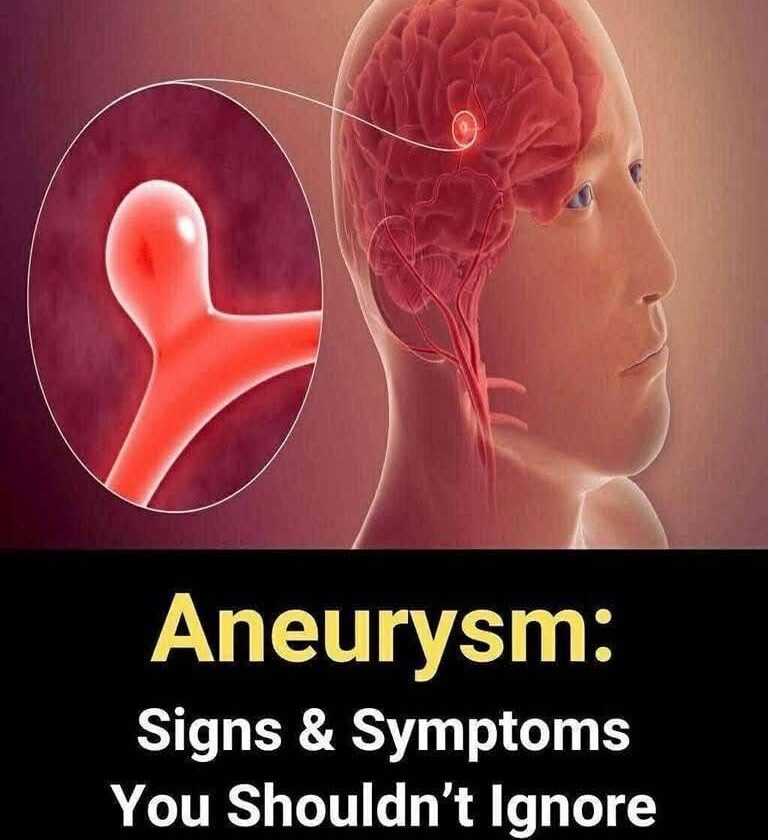
An aneurysm is a weakened area in a blood vessel wall that can bulge and enlarge. Some aneurysms cause no symptoms and are found incidentally, but others can become life-threatening if they rupture. The warning signs depend on where the aneurysm is located.
Signs you should not ignore
1. Sudden, severe “worst headache of your life”
- A sudden explosive headache can be a warning sign of a brain (cerebral) aneurysm rupture.
- It may occur with nausea, vomiting, neck stiffness, confusion, fainting, seizures, or vision changes.
2. New neurological symptoms
Seek urgent medical care for:
- Sudden weakness or numbness (especially on one side)
- Trouble speaking or understanding speech
- Loss of balance or coordination
- Sudden vision problems
- Seizures or loss of consciousness
3. Chest, back, or abdominal pain
Possible signs of an aneurysm involving larger arteries:
- Sudden, severe chest or upper back pain (possible aortic aneurysm emergency)
- Deep, persistent abdominal or back pain (possible abdominal aortic aneurysm)
- A feeling of a pulsating mass in the abdomen (sometimes occurs with abdominal aneurysms)
4. Signs of internal bleeding or shock
Call emergency services immediately if there is:
- Fainting or collapse
- Rapid heartbeat
- Dizziness or extreme weakness
- Pale, clammy skin
- Sudden severe pain that does not improve
Who may be at higher risk?
Risk can be increased by:
- High blood pressure
- Smoking
- Older age
- Family history of aneurysms
- Certain inherited connective tissue disorders
- Atherosclerosis (hardening of the arteries)
Many aneurysms are found before they rupture through imaging tests and can be monitored or treated depending on their size, location, and growth rate.
If someone has sudden severe headache, sudden chest/back pain, fainting, or stroke-like symptoms, it should be treated as an emergency and evaluated immediately.