If you’re looking for natural homemade weed control, there are several options that can help reduce weeds without using commercial herbicides. Effectiveness depends on the weed type, where it’s growing, and whether you want to kill existing weeds or prevent new ones.
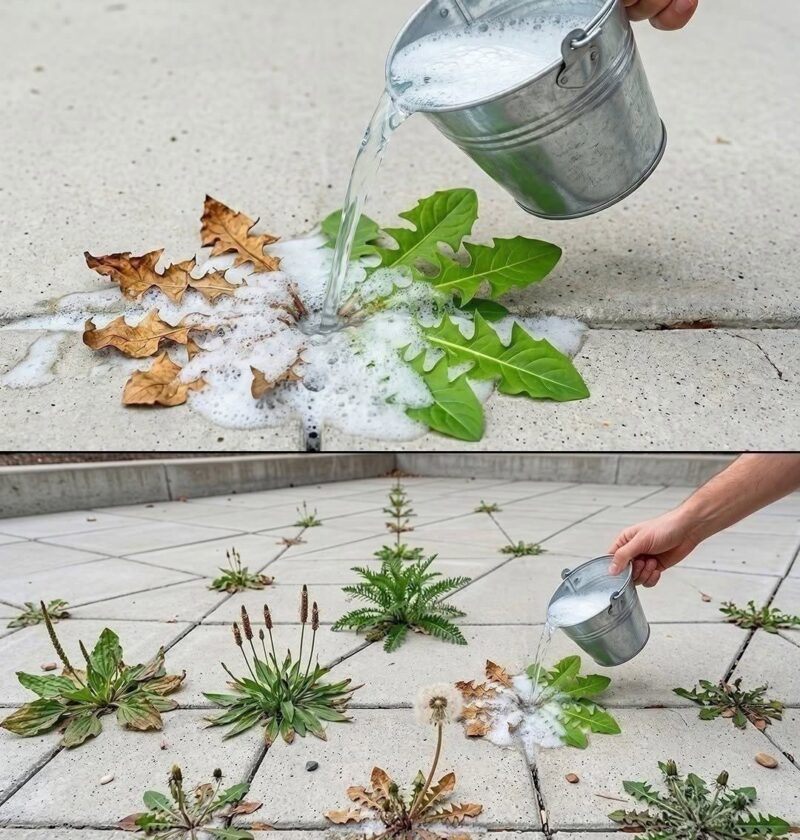
1. Vinegar-based weed spray
A common homemade weed killer is:
- 1 gallon (about 3.8 L) white vinegar
- 1 cup salt
- A small amount of liquid dish soap (helps the mixture stick)
How it works:
- Vinegar’s acetic acid can dry out plant leaves.
- Salt can interfere with the plant’s ability to take up water.
- Soap helps the spray coat the leaves.
Important: Use caution. Salt and vinegar can damage soil and prevent future plants from growing in that area, so avoid using it on lawns, garden beds, or near trees and shrubs.
2. Boiling water
- Pour boiling water directly onto weeds growing in cracks, sidewalks, and driveways.
- It works by damaging plant tissues.
This is one of the simplest methods and leaves no chemical residue, but it may require repeat applications.
3. Mulch as a weed barrier
For gardens:
- Apply a 2–4 inch layer of organic mulch (such as wood chips, straw, or shredded leaves).
- It blocks sunlight and reduces weed germination.
- It also helps retain moisture.
4. Hand removal with root extraction
For long-lasting results:
- Pull weeds after rain or watering when soil is softer.
- Remove as much of the root system as possible, especially for deep-rooted weeds.
5. Smothering weeds
For unwanted vegetation:
- Cover the area with cardboard or thick layers of newspaper.
- Add mulch on top.
- This blocks light and gradually kills many weeds.
Tips to avoid future weeds
- Keep soil covered with plants or mulch.
- Pull weeds before they produce seeds.
- Avoid disturbing soil unnecessarily, since digging can bring buried weed seeds to the surface.
For lawns, vegetable gardens, or driveways/patios, the best method is different—tell me where the weeds are growing and what type of weeds you’re dealing with, and I can suggest the safest approach.