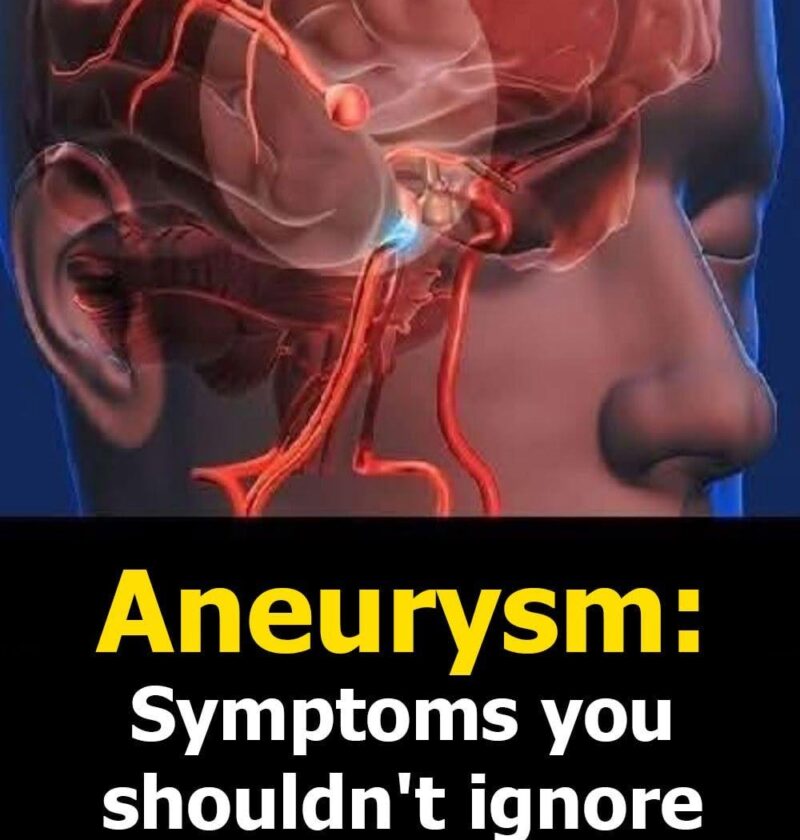
Aneurysm: Signs You Shouldn’t Ignore
An aneurysm occurs when a weakened area in the wall of a blood vessel bulges or expands. Some aneurysms cause no symptoms and may only be discovered during medical testing, while others can become life-threatening if they rupture.
The warning signs depend on where the aneurysm is located and whether it is leaking or rupturing.
1. Sudden, Severe Headache
A sudden, intense headache often described as the “worst headache of your life” can be a warning sign of a ruptured brain aneurysm and requires emergency attention.
2. Vision Changes
Possible signs include:
- Blurred or double vision
- Drooping eyelid
- Eye pain
- Trouble focusing
3. Neck Stiffness or Pain
Aneurysms affecting blood vessels in the brain may cause neck stiffness, especially when combined with a severe headache.
4. Numbness, Weakness, or Trouble Speaking
Sudden neurological symptoms such as:
- Weakness on one side of the body
- Facial drooping
- Difficulty speaking
- Confusion
may indicate a medical emergency.
5. Chest, Back, or Abdominal Pain
Depending on the location, an aneurysm may cause:
- Deep chest or back pain
- Severe abdominal or side pain
- A feeling of pressure or discomfort
6. A Pulsating Feeling in the Abdomen
Some abdominal aortic aneurysms may cause a noticeable pulsing sensation in the belly, especially in thinner individuals.
7. Shortness of Breath or Difficulty Swallowing
A large aneurysm can sometimes press on nearby structures and cause breathing or swallowing difficulties