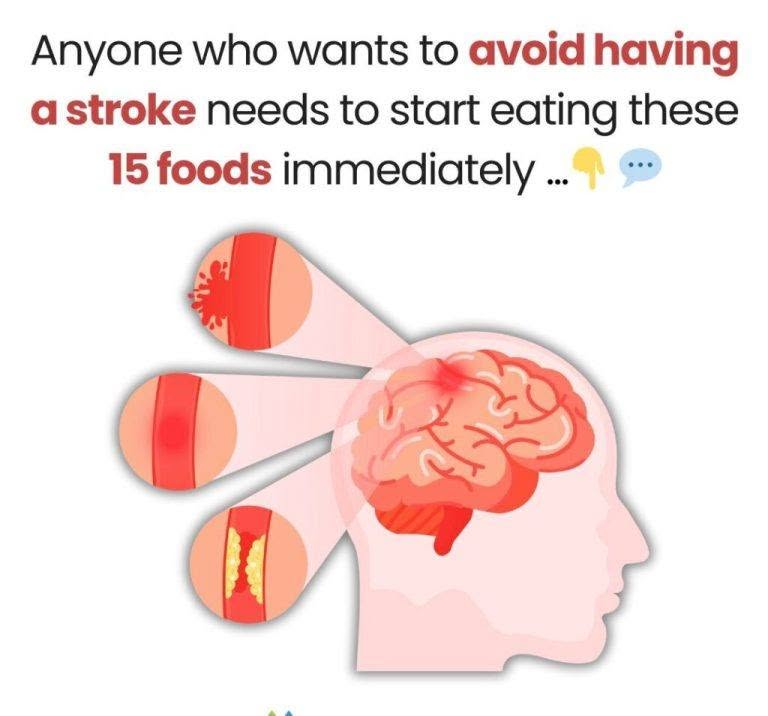
The headline “Anyone Who Wants to Avoid Having a Stroke Needs to Start Eating These 15 Foods Immediately” is a common health-post style claim, but no single food can guarantee stroke prevention. Stroke risk is influenced by many factors, including blood pressure, cholesterol, smoking, diabetes, physical activity, genetics, and overall diet pattern.
Foods that are consistently associated with better heart and blood vessel health include:
- Leafy greens (spinach, kale, lettuce) — rich in potassium, folate, and antioxidants.
- Berries (blueberries, strawberries) — provide polyphenols and fiber.
- Fatty fish (salmon, sardines, trout) — sources of omega-3 fats.
- Nuts (walnuts, almonds, pistachios) — contain healthy fats and minerals.
- Beans and lentils — high in fiber and plant-based protein.
- Whole grains (oats, brown rice, whole wheat) — support healthier cholesterol levels.
- Olive oil — a source of monounsaturated fats.
- Avocados — provide healthy fats and potassium.
- Tomatoes — contain antioxidants such as lycopene.
- Cruciferous vegetables (broccoli, cauliflower, cabbage).
- Garlic and onions — add flavor while supporting a heart-healthy eating pattern.
- Citrus fruits (oranges, grapefruit, lemons) — rich in vitamin C and plant compounds.
- Seeds (flaxseed, chia, pumpkin seeds) — provide fiber and healthy fats.
- Low-fat dairy or fortified alternatives — can help provide calcium and protein.
- Green tea — contains antioxidant compounds.
A stroke-prevention eating pattern is usually less about a “magic list” and more about habits such as:
- Eating more vegetables, fruits, legumes, and whole grains
- Choosing unsaturated fats over trans fats and excess saturated fats
- Limiting excess salt, processed foods, and added sugars
- Maintaining healthy blood pressure and cholesterol levels
If you’re making changes because of a personal stroke risk (high blood pressure, diabetes, previous stroke, or family history), it’s best to discuss a plan with a healthcare professional.