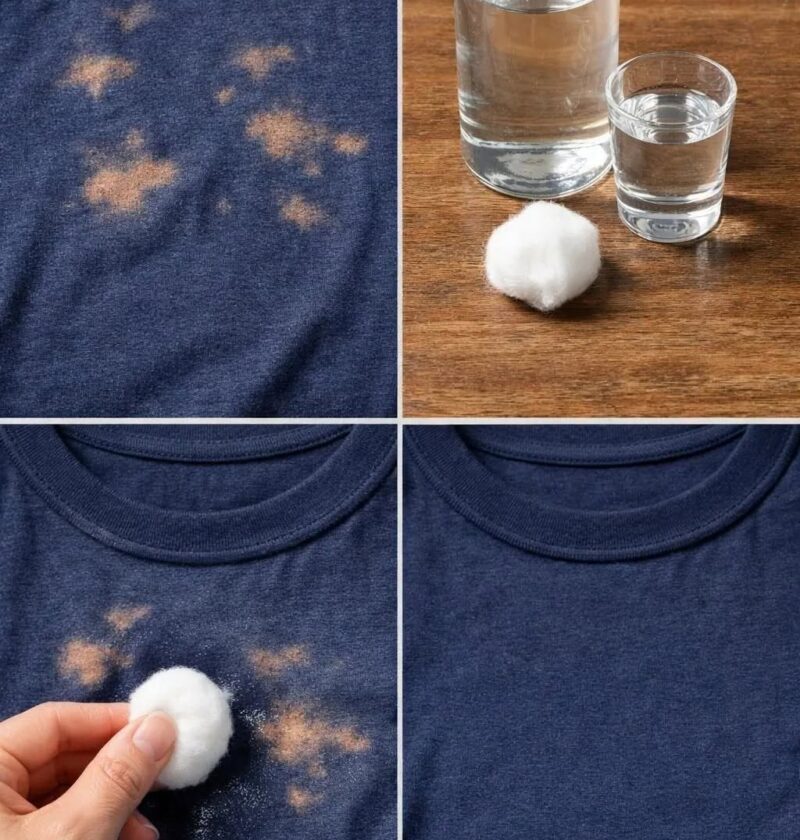
👕 Bleach Stains on Your Clothes? Don’t Throw Them Away Yet
The important thing to understand is that a bleach mark usually isn’t a normal stain. Chlorine bleach removes the fabric’s dye, so washing it repeatedly won’t restore the original color. (Clorox™)
Here’s how to rescue the garment
1. If the bleach was spilled just now:
Rinse the area thoroughly with plenty of water as soon as possible. This helps remove remaining bleach and limit further damage.
2. For a small bleach spot:
Use a fabric marker or fabric paint that closely matches the original color. This works particularly well for small marks on dark clothing. Test the color on an inconspicuous area first. (Clorox™)
3. For larger discoloration:
You can try redyeing the garment, but results aren’t guaranteed. Because bleach can alter the fibers as well as remove dye, the damaged areas may not absorb new dye exactly like the surrounding fabric. (TextileTuts)
4. Get creative:
If matching the color isn’t practical, cover the mark with embroidery, a patch, fabric appliqué, or decorative stitching. For multiple spots, turning the garment into an intentional pattern can look better than trying to hide every mark.
⚠️ One important warning
Never mix vinegar with chlorine bleach. Rinse the garment thoroughly before using any other product. Also follow the garment’s care label and test any treatment on a hidden area first. (UGA Extension)
What about black clothes?
For a tiny spot on black fabric, a black fabric marker can make the discoloration much less noticeable. The color may fade with washing, so it may require occasional touch-ups. (Clorox™)
Bottom line: You usually can’t remove a true bleach mark—you have to restore or cover the lost color. For small spots, a matching fabric marker is the easiest solution; for larger damage, consider dyeing, embroidery or a patch.