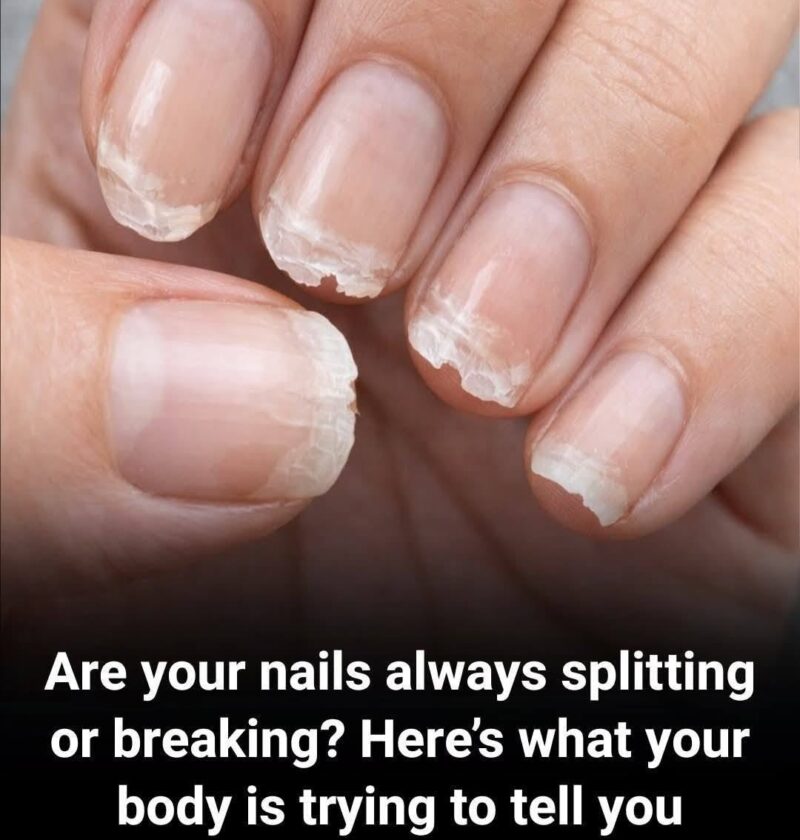
“Brittle or fragile nails: what your body is trying to tell you”
is a common health headline. Brittle nails can sometimes be linked to nutrition or health issues, but they are not a reliable way to diagnose a specific problem. Nails are affected by many everyday factors as well as medical conditions.
Common causes of brittle or fragile nails
1. Dryness and environmental damage
- Frequent hand washing or sanitizer use
- Cold, dry weather
- Repeated exposure to detergents or cleaning chemicals
- Frequent use of nail polish remover (especially acetone)
2. Normal aging
- Nails often become thinner, drier, and more fragile with age.
3. Nutritional factors
In some people, brittle nails may be associated with:
- Low iron levels (especially with other signs such as fatigue or pale skin)
- Inadequate protein intake
- Certain vitamin or mineral deficiencies
4. Thyroid or hormonal issues
- An underactive thyroid can sometimes cause dry skin and brittle nails.
5. Nail trauma or habits
- Picking, biting, aggressive filing, or using nails as tools can weaken them.
6. Skin and nail conditions
- Fungal infections
- Psoriasis affecting the nails
- Other inflammatory nail disorders
What may help strengthen nails
✅ Moisturize nails and cuticles regularly (especially after washing hands)
✅ Wear gloves when using cleaning products or soaking hands in water
✅ Avoid harsh nail removers and excessive buffing
✅ Keep nails trimmed to reduce splitting
✅ Eat enough protein and maintain a balanced diet
✅ Avoid using nails as tools for opening or scraping objects
When to consider medical advice
See a healthcare professional if brittle nails are:
- A sudden new change
- Severe or rapidly worsening
- Associated with hair loss, unusual fatigue, weight changes, or other symptoms
- Accompanied by nail color changes, pain, swelling, or separation from the nail bed
The headline suggests nails are always “sending a message,” but in reality, brittle nails are often caused by simple external factors, while persistent changes may warrant a closer look.