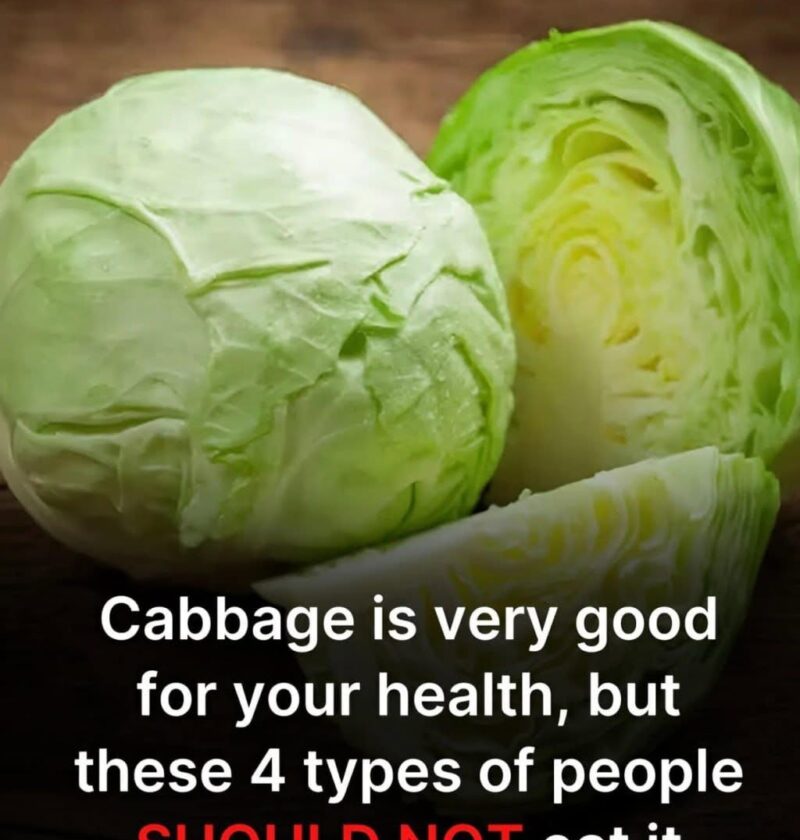
Who can benefit from cabbage?
Cabbage is:
- High in fiber, which supports digestive health.
- Rich in vitamins, especially vitamin C and vitamin K.
- Low in calories, making it a filling addition to meals.
- A source of antioxidants that support overall health.
Who may need to be cautious?
People with digestive sensitivity
Raw cabbage can cause gas and bloating because it contains fermentable carbohydrates. Cooking it often makes it easier to digest.
People taking blood thinners
Cabbage is high in vitamin K, which affects blood clotting. If you take medications such as Warfarin, you don’t necessarily need to avoid cabbage, but it’s important to keep your vitamin K intake consistent rather than making large day-to-day changes. Discuss your diet with your healthcare provider.
People with certain thyroid conditions
Cabbage contains compounds called goitrogens, which may interfere with thyroid function if eaten in very large amounts, especially raw, and particularly in people with iodine deficiency. For most people eating a balanced diet, moderate amounts are not a concern, and cooking reduces this effect.
People with specific digestive disorders
If you have conditions such as Irritable bowel syndrome, cabbage may trigger symptoms because of its fiber and fermentable carbohydrate content. Individual tolerance varies.
Bottom line
For the vast majority of people, Cabbage is a healthy food that can be part of a balanced diet. Only certain groups—such as people taking vitamin K–sensitive blood thinners, those with specific digestive conditions, or those with certain thyroid issues—may need to adjust how much they eat or how it’s prepared. If you have one of these conditions, it’s best to ask your healthcare provider or a registered dietitian for personalized advice.