🥬 Cabbage Is Nutritious—but Who Should Be More Careful?
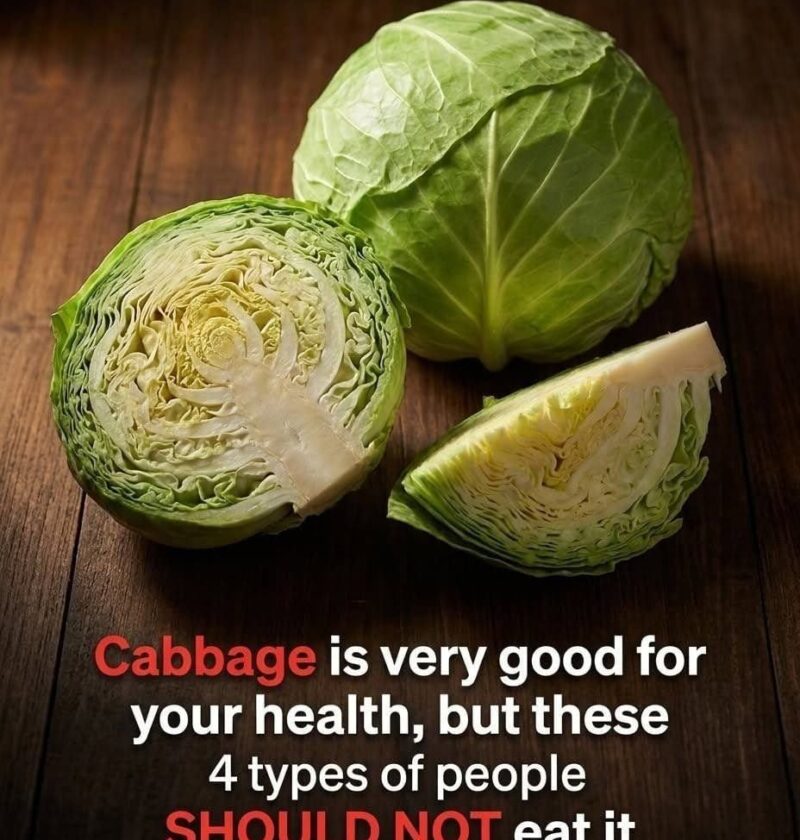
Cabbage is a healthy vegetable and a good source of fiber, vitamin C, vitamin K, and other nutrients. Eating it as part of a varied diet is generally safe for most people.
But there are a few situations where you may want to pay closer attention.
⚠️ 1. People taking warfarin
Cabbage contains vitamin K, which plays an important role in blood clotting. Vitamin K can affect the action of warfarin, so the key isn’t necessarily to avoid cabbage—it is to keep your vitamin-K intake reasonably consistent from day to day. (Office of Dietary Supplements)
If you’re taking warfarin, don’t suddenly start eating very large amounts of cabbage or suddenly eliminate it without discussing the change with your healthcare team.
🦋 2. People with thyroid concerns
Cabbage and other cruciferous vegetables contain compounds sometimes described as “goitrogens.” However, normal consumption of these vegetables isn’t generally considered a problem for people with adequate iodine intake. There’s no good reason for most people to eliminate cabbage simply because they have a thyroid condition.
💨 3. People prone to gas or bloating
Cabbage contains fermentable carbohydrates and fiber that can cause gas, bloating, or abdominal discomfort in some people, particularly when eaten in large quantities. Starting with smaller portions may help.
🥗 4. People with digestive sensitivities
If cabbage consistently causes significant discomfort, you don’t have to force yourself to eat it. Cooking it thoroughly and adjusting the portion size may make it easier to tolerate.
❤️ What about its health benefits?
Cabbage is a nutrient-dense vegetable that can fit well into a heart-healthy eating pattern. Red cabbage, in particular, also provides anthocyanins and other plant compounds.
Bottom line: Cabbage isn’t a dangerous food that most people need to avoid. The biggest practical caution is for people taking warfarin, who should keep their vitamin-K intake consistent. For everyone else, cabbage can be a perfectly healthy addition to meals. (Office of Dietary Supplements)