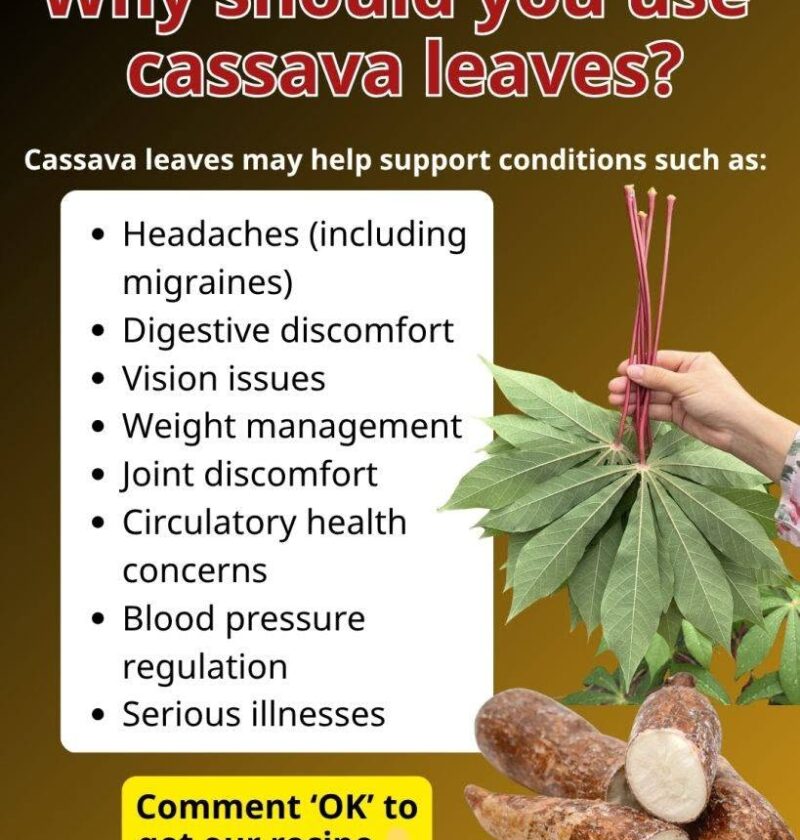
Cassava leaves can be a nutritious food when prepared correctly, but they must not be eaten raw because they contain naturally occurring compounds (cyanogenic glycosides) that can release cyanide.
If you use cassava leaves:
- Wash them well.
- Crush or chop the leaves, which helps release the natural toxins.
- Boil them thoroughly in plenty of water (many traditional recipes boil for 15–30 minutes or longer, depending on the variety and preparation).
- Discard the cooking water rather than reusing it.
- Cook them with other ingredients such as onions, tomatoes, peanuts, coconut milk, fish, or meat, depending on the recipe.
Cassava leaves are a good source of:
- Vitamin A (as beta-carotene)
- Vitamin C
- Folate
- Calcium and iron
- Fiber
However, proper preparation is essential. Eating raw or inadequately cooked cassava leaves can cause cyanide poisoning, especially if consumed in large amounts or as a staple food without proper processing.
If you mean a specific use—such as a traditional recipe, medicinal use, or garden use—let me know, and I can provide more detailed information.