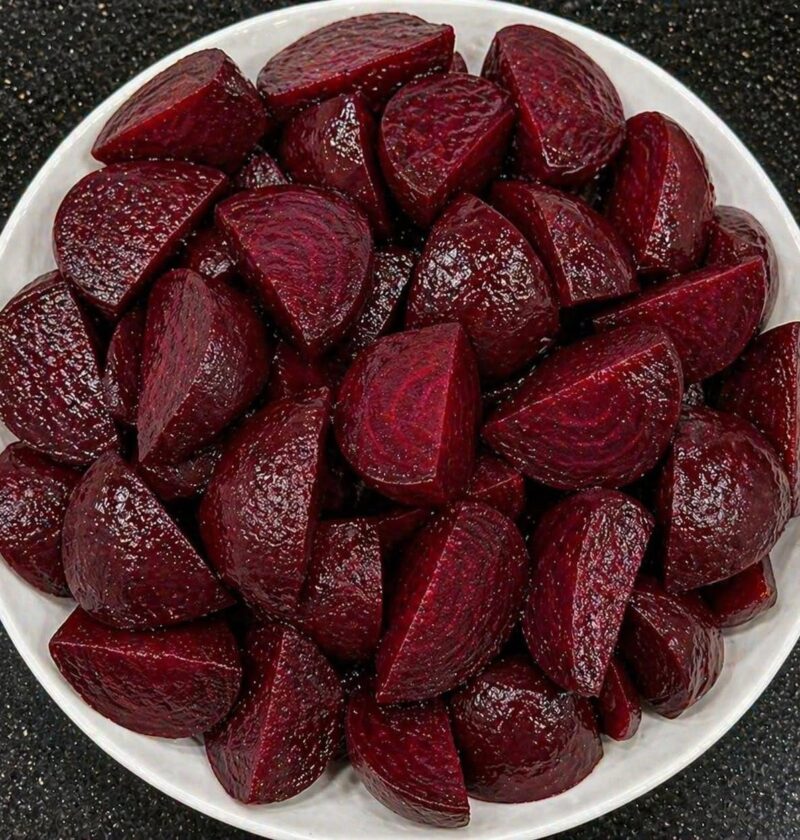
“Doctors Reveal Eating Beets Causes…” — What’s the Real Story?
Beets are generally a healthy food, not something most people need to avoid. They’re rich in fiber, potassium, folate and plant compounds, and their natural nitrates may modestly support blood-vessel function and blood pressure. (Cleveland Clinic)
One surprising effect: red urine or stool
After eating beets, some people notice pink or red urine or stool. This is called beeturia and is usually harmless—the beet pigment is simply passing through the body. (NCBI)
However, don’t automatically assume red urine is from beets. If you haven’t recently eaten beets, or the discoloration persists, blood in the urine needs medical evaluation. (Cleveland Clinic)
⚠️ Who should be more cautious?
- People with a history of calcium-oxalate kidney stones: beets are relatively high in oxalates. (Cleveland Clinic)
- People with low blood pressure or taking blood-pressure medication: beetroot’s nitrates may further lower blood pressure in some people. (Northwestern Medicine)
- People who eat very large amounts: digestive upset can occur.
Bottom line: Eating beets doesn’t inherently “cause” a dangerous condition. For most people, they’re a nutritious addition to a balanced diet. The most famous unexpected effect is simply temporarily pink/red urine or stool.