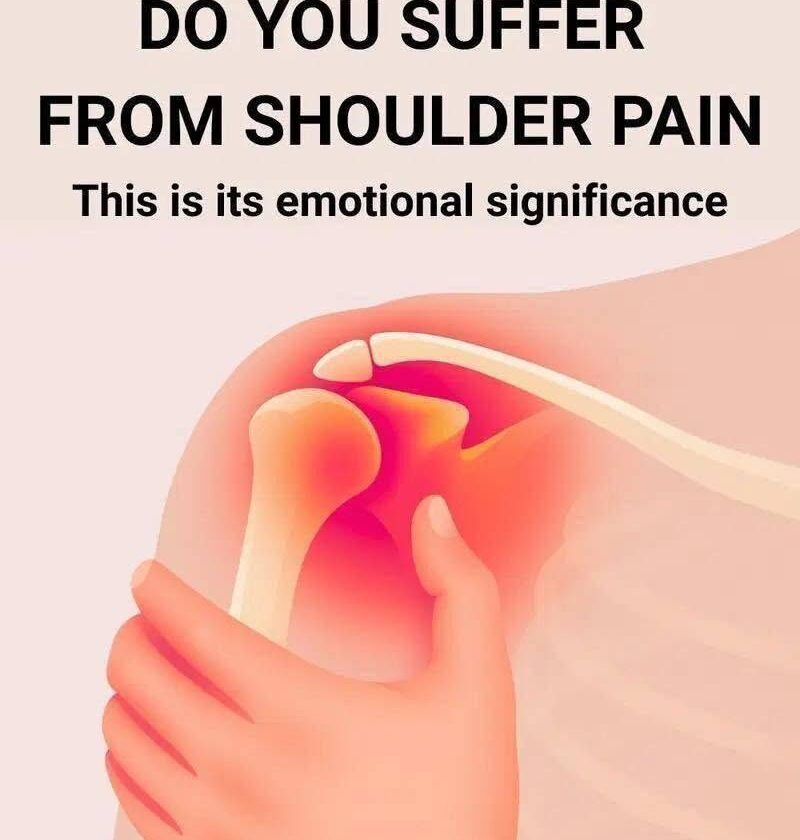
If you’re fact-checking “Does your shoulder hurt? Here’s what it means emotionally…”, the emotional interpretation should be treated as symbolic, not medical fact.
You may see posts claiming things such as:
Right shoulder pain = carrying too much responsibility
Left shoulder pain = grief, emotional hurt, or relationship issues
Neck/shoulder tension = suppressed anger or stress
There is no reliable scientific evidence that pain on a particular side of the shoulder corresponds to a particular emotion.
There is, however, a real connection between stress and physical symptoms. Stress can increase muscle tension and contribute to or worsen shoulder and neck pain. Poor sleep, anxiety, and persistent stress can also make existing pain feel more intense. (nhs.uk
)
Shoulder pain can also result from much more ordinary physical causes, including muscle strain, tendon problems, bursitis, arthritis, frozen shoulder, or nerve irritation. (nhs.uk
)
Important: Don’t assume shoulder pain is emotional if it is sudden or severe. Shoulder pain accompanied by chest pain/pressure, shortness of breath, sweating, nausea, dizziness, or pain spreading to the arm, jaw, neck, or back can be a heart-attack warning sign and requires emergency medical attention. (nhs.uk
)
Bottom line: Your emotional state can affect shoulder pain, but your shoulder cannot reliably tell you which emotion you’re suppressing or “holding.” Persistent or unexplained pain deserves a proper medical evaluation.