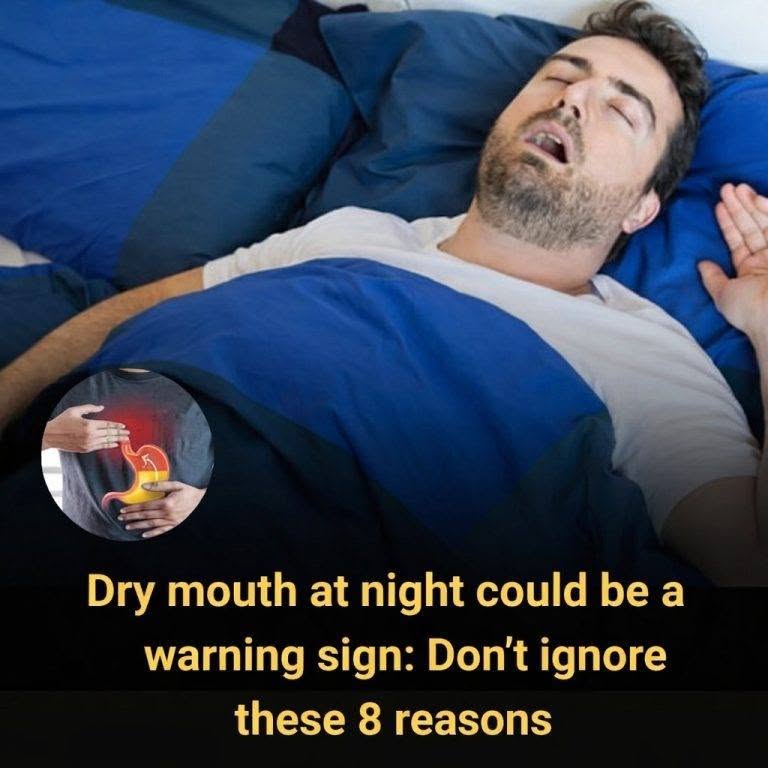
Waking up with a dry mouth occasionally is common, but if it happens frequently, it can point to an underlying issue. Here are eight signs associated with nighttime dry mouth that are worth paying attention to:
- Persistent dry or sticky feeling in your mouth after waking.
- Difficulty swallowing or speaking, especially first thing in the morning.
- Bad breath that doesn’t improve with normal oral hygiene.
- Cracked lips or sores at the corners of the mouth.
- A dry, rough, or burning tongue, sometimes with changes in taste.
- Increased cavities or gum problems, since saliva helps protect teeth.
- Waking up thirsty multiple times during the night.
- Snoring or breathing through your mouth, which can dry out the mouth and may be associated with sleep-disordered breathing.
Common causes
- Dehydration
- Mouth breathing due to nasal congestion or allergies
- Snoring or obstructive sleep apnea
- Side effects of medications (such as some antihistamines, antidepressants, and blood pressure medicines)
- Smoking or alcohol use
- Medical conditions that reduce saliva production, such as diabetes or autoimmune disorders like Sjögren’s syndrome
What you can do
- Stay well hydrated during the day.
- Avoid alcohol and tobacco before bed.
- Treat nasal congestion if it’s causing mouth breathing.
- Use a humidifier if your bedroom air is very dry.
- Maintain good oral hygiene and consider sugar-free gum or lozenges during the day to stimulate saliva (if appropriate).
When to see a healthcare professional
Arrange an evaluation if:
- Dry mouth persists for several weeks.
- You develop frequent cavities, mouth sores, or trouble swallowing.
- You snore heavily, gasp during sleep, or feel excessively sleepy during the day (possible signs of sleep apnea).
- You have dry eyes, joint pain, or other symptoms suggesting an underlying medical condition.
Persistent dry mouth isn’t usually an emergency, but it’s worth discussing with a healthcare professional or dentist because identifying and treating the underlying cause can help prevent dental problems and improve your comfort.