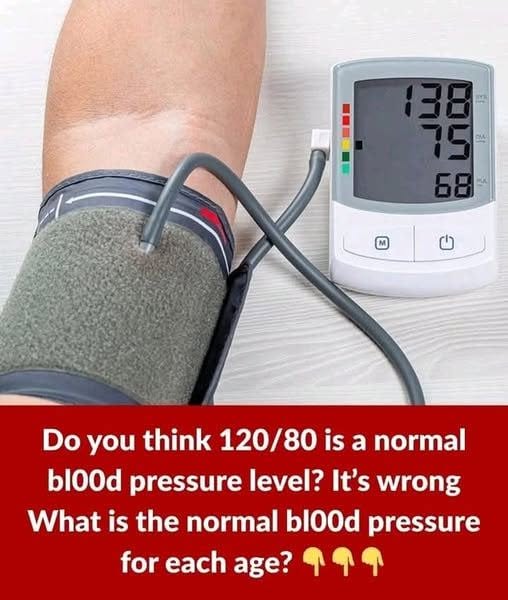
Blood pressure does not have one exact “normal” number for each age. In general, healthy adult blood pressure is usually considered around:
- Systolic (top number): about 90–120 mmHg
- Diastolic (bottom number): about 60–80 mmHg
Blood pressure tends to rise slightly with age, but a reading consistently above 130/80 mmHg in adults is generally considered elevated or high blood pressure and should be discussed with a healthcare professional.
Approximate healthy blood pressure ranges by age
| Age group | Typical normal range (approx.) |
|---|---|
| Newborn (0–1 month) | Around 60–90 / 30–60 mmHg |
| Infants (1–12 months) | Around 70–100 / 50–65 mmHg |
| Children (1–5 years) | Around 80–110 / 50–80 mmHg |
| Children (6–12 years) | Around 90–120 / 60–75 mmHg |
| Teenagers (13–18 years) | Around 100–120 / 65–80 mmHg |
| Adults (18–39 years) | Around 110–120 / 70–80 mmHg |
| Adults (40–59 years) | Around 110–130 / 70–85 mmHg |
| Adults (60+ years) | Often around 120–140 / 70–90 mmHg (individual targets vary) |
Blood pressure categories for adults (general guide)
- Normal: Less than 120/80 mmHg
- Elevated: 120–129 and less than 80
- High blood pressure (Stage 1): 130–139 or 80–89
- High blood pressure (Stage 2): 140+ or 90+
- Hypertensive crisis: 180+ and/or 120+ (requires urgent medical attention, especially with symptoms)
A single reading does not always indicate a problem. Blood pressure can change due to stress, exercise, caffeine, illness, medications, and the time of day. Repeated measurements taken correctly give a better picture.