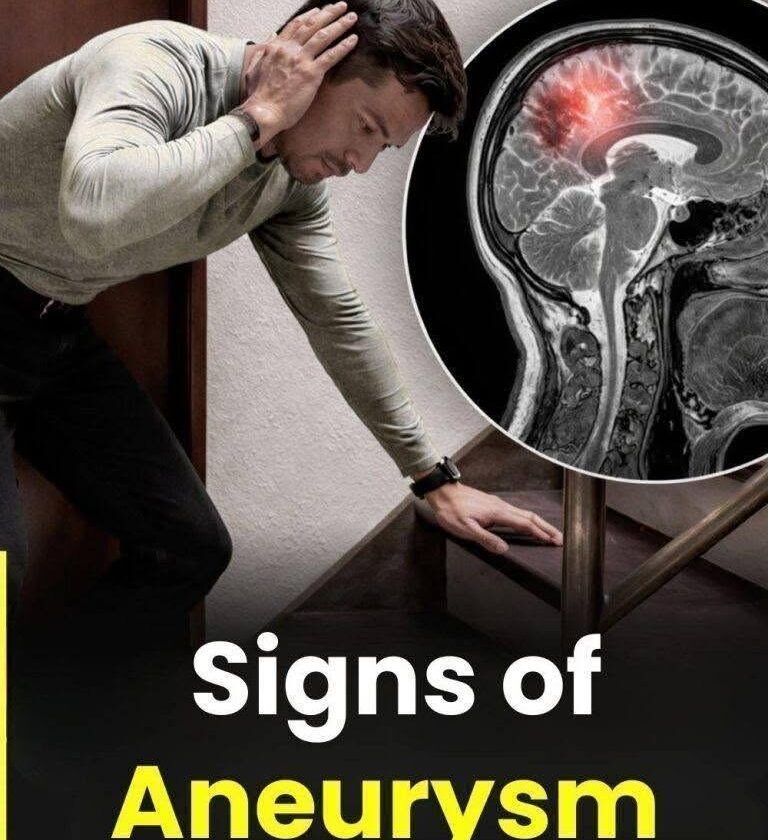
An aneurysm is a weak, bulging area in an artery wall. It can form in different parts of the body, most dangerously in the brain or aorta. The danger is that it may leak or rupture suddenly, which can be life-threatening.
🚨 Signs you should never ignore
Symptoms depend on where the aneurysm is located and whether it is leaking or rupturing.
🧠 Brain aneurysm (cerebral aneurysm)
Often silent until it ruptures.
Warning signs (before or during rupture):
- Sudden, severe headache (“worst headache of your life”)
- Blurred or double vision
- Pain above or behind one eye
- Drooping eyelid
- Stiff neck
- Nausea or vomiting
- Sudden loss of consciousness (emergency)
If it ruptures → can cause a subarachnoid hemorrhage, a medical emergency.
❤️ Aortic aneurysm (in chest or abdomen)
Chest (thoracic) signs:
- Deep, constant chest pain
- Back pain between shoulder blades
- Shortness of breath
- Hoarseness or cough
Abdominal (abdominal aortic aneurysm) signs:
- Pulsating feeling in the abdomen
- Deep abdominal or lower back pain
- Sudden severe pain if rupture occurs
- Dizziness or fainting
A rupture here can cause rapid internal bleeding and shock.
⚠️ When it becomes an emergency
Seek urgent medical help if there is:
- Sudden intense headache or chest/back pain
- Fainting or collapse
- Signs of stroke (face droop, arm weakness, speech trouble)
- Rapid drop in blood pressure or extreme weakness
🧠 Important reality check
Most aneurysms:
- Have no symptoms for years
- Are found accidentally on scans
- Become dangerous only when they grow or rupture
Risk factors
- High blood pressure (major one)
- Smoking
- Family history
- Aging
- Atherosclerosis (artery hardening)
Bottom line
The most dangerous aneurysm signs are sudden, severe pain + neurological symptoms or collapse. These are not “wait and see” situations—they require emergency care.
If you want, I can break down how aneurysms are detected early (scans, screening tests) or how doctors decide whether to treat or monitor them.