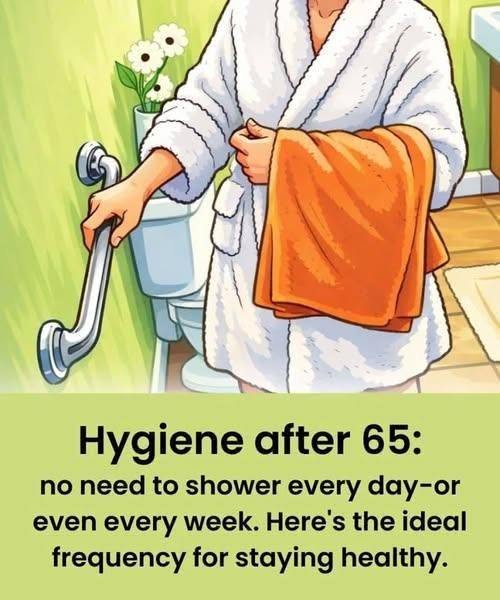
The claim “daily showers after 65 may do more harm than good” is partly true for some people, but it is not a rule. Older adults can shower daily if their skin tolerates it and hygiene needs require it. The concern is mainly about skin health.
As people age, skin often becomes:
- Thinner and more fragile
- Less oily and less able to retain moisture
- More prone to dryness, itching, and irritation
Daily long, hot showers—especially with strong soaps—may contribute to:
- Dry, itchy skin
- Hot water can strip away natural oils that protect the skin.
- Skin irritation
- Harsh soaps or frequent scrubbing can damage the skin barrier.
- Worsened eczema or sensitivity
- Some people may notice more redness or discomfort.
- Higher risk of small cracks in the skin
- Dry, damaged skin can make it easier for irritation or infection to occur.
A skin-friendly routine for many older adults includes:
- Using warm rather than very hot water
- Keeping showers reasonably short
- Using gentle, fragrance-free cleansers
- Applying moisturizer after bathing
- Washing areas that need daily cleaning (such as underarms and groin) even if a full shower is less frequent
However, shower frequency should be based on individual needs, including activity level, sweating, skin conditions, and personal preference. A person with certain medical conditions or mobility challenges may need a different routine.