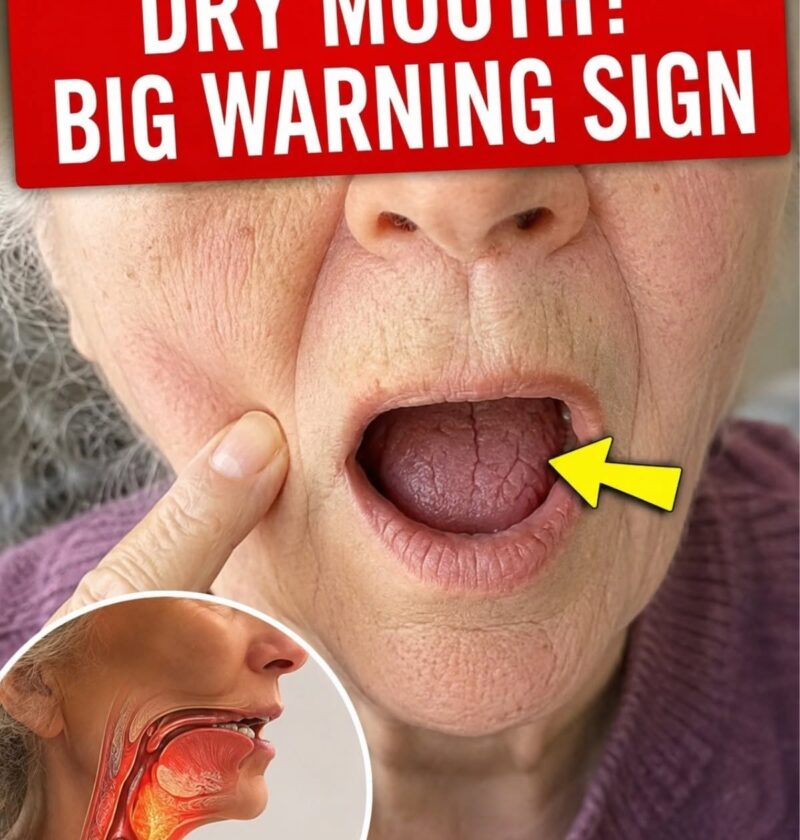
“Dry Mouth Is Not Aging — It’s Your Saliva Shutting Down” — What’s Actually True?
The headline contains a grain of truth but is overly dramatic.
Dry mouth, or xerostomia, means there isn’t enough saliva to keep the mouth comfortably moist. It is not considered a normal or inevitable part of aging. The National Institute of Dental and Craniofacial Research specifically advises that persistent dry mouth should be evaluated rather than simply attributed to getting older.
N
NIDCR
+1
Why does it happen?
In older adults, common contributors include:
Medications: Hundreds of medications can reduce saliva production. Drugs for blood pressure, depression, allergies, bladder problems, pain, and other conditions can contribute. Taking multiple medications increases the risk.
N
NIDCR
+1
Dehydration: Not getting enough fluids can make the mouth dry.
N
NIDCR
Medical conditions: Diabetes, Sjögren’s disease, and other illnesses can affect saliva production.
N
NIDCR
Cancer treatment: Radiation involving the head and neck can permanently damage salivary glands in some people.
N
NIDCR
Mouth breathing or snoring: Breathing through the mouth, especially at night, can worsen the sensation of dryness.
M
Mayo Clinic
Salivary-gland problems: Blocked ducts, inflammation, infection, or other gland disorders can reduce saliva flow.
N
NIDCR
Importantly, feeling that your mouth is dry doesn’t always mean your salivary glands have completely “shut down.” Some people experience xerostomia even when measurable saliva production is relatively normal.
A
ADA
Why saliva matters
Saliva isn’t just water. It helps with chewing, swallowing, speaking, protecting teeth, controlling microorganisms, and maintaining the mouth’s normal environment. Persistent reduction in saliva increases the risk of cavities, oral infections, mouth discomfort, and problems with dentures.
N
NIDCR
+1
What can help?
Drinking adequate fluids, chewing sugar-free gum, using saliva substitutes when appropriate, maintaining excellent dental hygiene, and avoiding tobacco and excessive alcohol can help relieve symptoms.
N
NIDCR
+1
If dry mouth is persistent, don’t stop or change prescription medication on your own. A dentist or doctor can review your medications and look for an underlying cause.
N
NIDCR
Bottom line: Dry mouth is common in older adults, but “it’s just aging” is not a good explanation. Often, there is a treatable contributor—particularly medication use or dehydration.
N
M
A
Sources