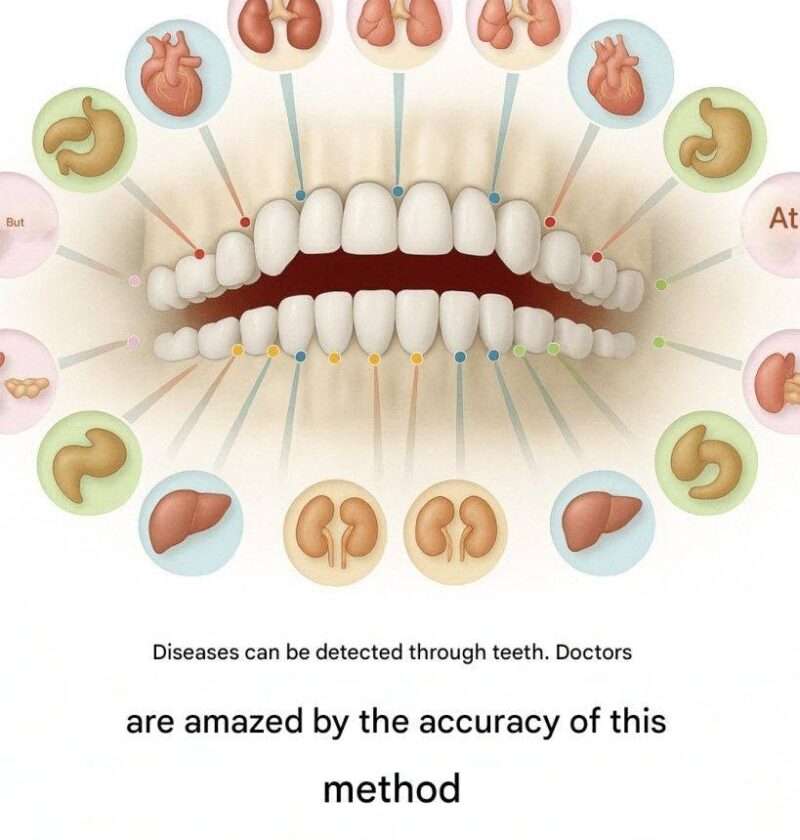
The idea that “each tooth is connected to a specific organ, and tooth pain predicts future organ problems” is a popular claim online, but it is not supported by modern medical evidence.
There is a real connection between oral health and overall health, but it is not a one-to-one map where a particular tooth corresponds to a particular organ.
What tooth pain can actually indicate
Dental pain is usually caused by problems such as:
- Tooth decay (cavities)
- Gum disease
- Cracked or damaged teeth
- Tooth abscess (infection)
- Sinus problems that refer pain to upper teeth
- Jaw joint (TMJ) issues or muscle tension
How oral health can affect the body
The mouth can influence general health because:
- Gum infections involve inflammation and bacteria.
- Severe gum disease has been associated with increased risk of some health problems, including cardiovascular disease, though this does not mean gum disease directly causes every condition.
- Poor oral health can be especially important for people with diabetes or weakened immune systems.
When dental pain should be checked
See a dentist if you have:
- Pain lasting more than a day or two
- Swelling of the face or gums
- Fever
- A bad taste or pus near a tooth
- Sensitivity that is worsening
- Pain when biting
A toothache is best treated by finding the actual dental cause, rather than trying to identify an internal organ problem from the location of the tooth.