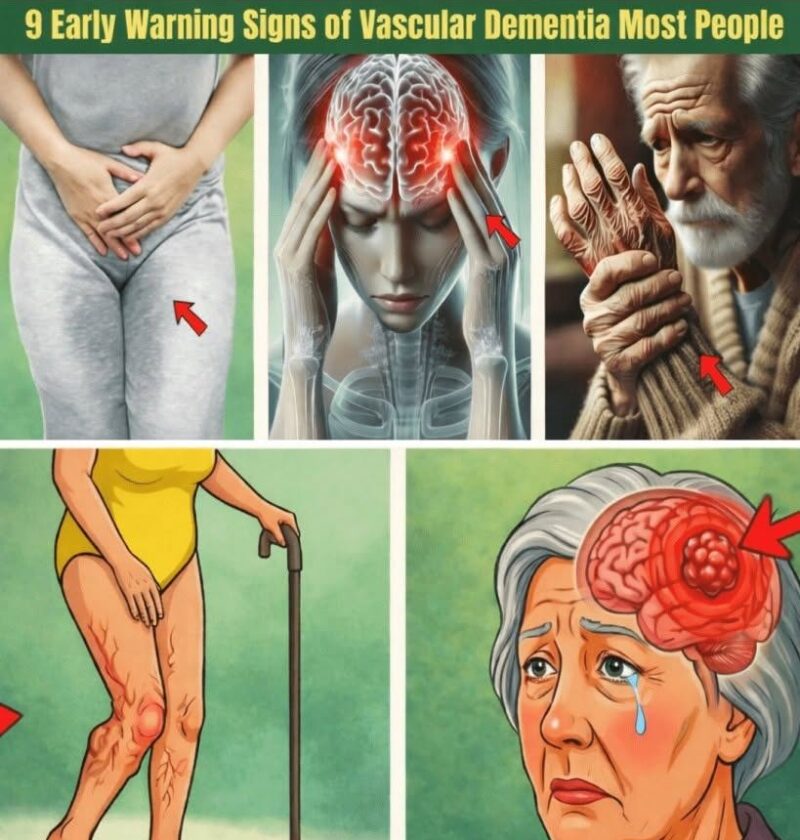
Vascular dementia happens when reduced blood flow damages brain tissue over time—often due to stroke, small vessel disease, or chronic conditions like high blood pressure and diabetes.
Early signs people commonly miss
1. Slower thinking (not just forgetfulness)
Instead of forgetting things completely, the person:
- Takes longer to process information
- Struggles to follow conversations
- Needs more time to make decisions
This “mental slowing” is often one of the earliest clues.
2. Trouble planning or organizing
You may notice difficulty with:
- Managing bills or finances
- Following recipes or instructions
- Planning simple daily tasks
This is more about executive function than memory.
3. Sudden or stepwise decline (often missed)
Unlike Alzheimer’s, symptoms may:
- Worsen suddenly after a small stroke
- Then stay stable for a while
- Then drop again later
This “step-like” pattern is very characteristic but often overlooked.
4. Mood or personality changes
Early brain vascular changes can cause:
- Irritability or apathy
- Reduced motivation
- Depression-like symptoms
These are sometimes mistaken for emotional stress.
5. Mild confusion in familiar settings
Examples:
- Getting lost in familiar routes
- Trouble multitasking
- Slower reaction in everyday situations
6. Balance or movement problems (important clue)
Because blood vessel damage can affect motor pathways:
- Unsteady walking
- Frequent falls
- Slower, shuffling movements
This can appear earlier than memory loss in some people.
7. Attention problems
People may:
- Lose focus easily
- Struggle with multitasking
- Seem “mentally distracted” often
When to take it seriously
You should consider medical evaluation if symptoms:
- Are getting progressively worse
- Affect daily independence
- Occur after a stroke or mini-stroke (TIA)
- Combine cognitive + movement changes
Important reality check
These symptoms are not specific to vascular dementia alone. They can also come from:
- Vitamin deficiencies (B12)
- Thyroid problems
- Depression or anxiety
- Medication side effects
- Sleep disorders
That’s why proper medical assessment is essential.
Bottom line
Early vascular brain changes are less about “forgetting names” and more about:
slowed thinking, planning difficulty, mood changes, and movement/balance issues—especially after vascular events.
If you want, I can break down early warning signs of Alzheimer’s vs vascular dementia side-by-side, which makes the differences much clearer.