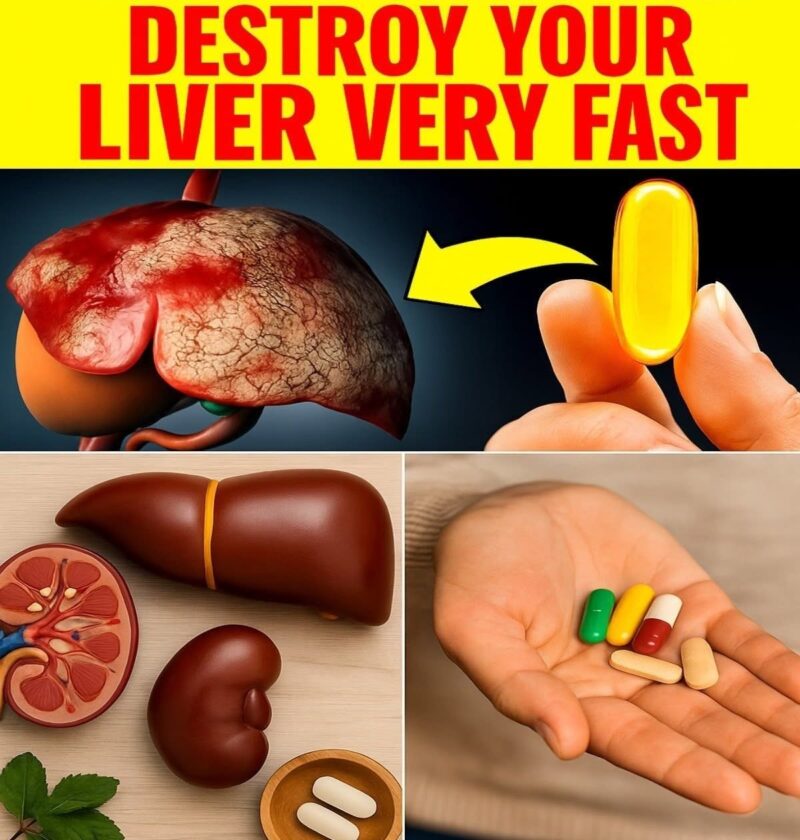
The headline “DEADLY! 9 Vitamins & Supplements That DESTROY Your Liver & Kidneys” is sensationalized. Most vitamins and supplements do not damage the liver or kidneys when used appropriately. However, some can cause serious harm if taken in high doses, used for long periods, or combined with certain medications or existing health conditions.
Here are examples with evidence of potential risk:
- Vitamin A (high doses)
- Excessive intake can cause liver damage over time.
- Avoid exceeding the recommended dose unless prescribed.
- Niacin (Vitamin B3)
- High-dose niacin used for cholesterol can cause liver injury in some people.
- It should be taken under medical supervision.
- Vitamin D (excessive doses)
- Too much vitamin D can lead to high calcium levels, which may damage the kidneys.
- Iron supplements
- Unnecessary or excessive iron can harm the liver and other organs, especially in people with certain genetic conditions or overdose.
- Green tea extract (concentrated supplements)
- Rarely, concentrated extracts have been linked to liver injury. Drinking green tea itself is generally not associated with this risk.
- Kava
- An herbal supplement associated with rare but serious liver toxicity.
- Black cohosh
- Has been linked to rare cases of liver injury, although a direct cause has not been proven in every case.
- Bodybuilding or weight-loss supplements
- Some have been associated with liver injury, particularly products containing undisclosed ingredients or anabolic steroids.
- Aristolochia (aristolochic acid-containing herbs)
- These herbal products can cause severe kidney damage and increase the risk of certain cancers. They are banned or restricted in many countries.
How to reduce your risk
- Take supplements only when there’s a clear reason or a healthcare provider recommends them.
- Avoid taking more than the recommended dose.
- Tell your healthcare provider about all supplements and over-the-counter products you use.
- Choose products that have been independently tested for quality when possible.
- Be especially cautious if you have liver disease, kidney disease, or take multiple medications.
Seek medical attention promptly if you develop
- Yellowing of the skin or eyes (jaundice)
- Dark urine or pale stools
- Severe abdominal pain
- Persistent nausea or vomiting
- Unusual fatigue
- Decreased urine output or swelling