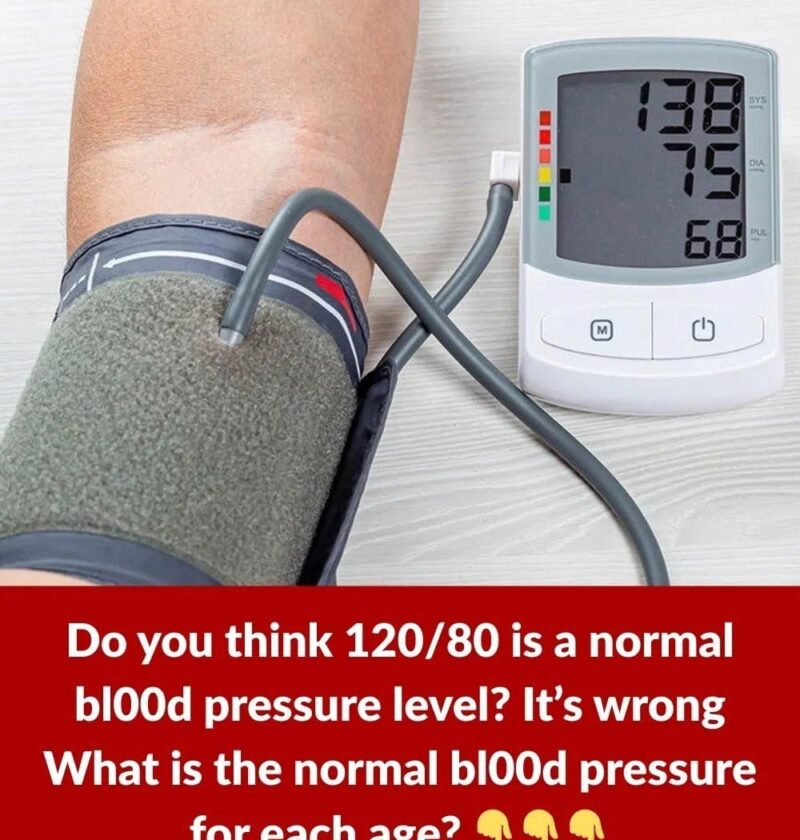
The idea that there’s a very different “normal blood pressure for every age” is a bit misleading. Modern medical guidelines treat blood pressure targets as mostly the same for adults, with only slight adjustments for older people depending on health status.
Let’s break it down clearly.
What is “normal” blood pressure?
Normal blood pressure for most adults is:
- Around 120/80 mmHg
(systolic / diastolic)
This is considered optimal at almost any adult age.
Current medical targets by age group
Children (rough guide)
- Varies widely by height and age
- Pediatric charts are used (not a single number)
Teens (13–18)
- Roughly: 110–120 / 70–80
- Similar to adults
Adults (18–59)
- Normal: <120 / <80
- Elevated: 120–129 / <80
- High blood pressure: ≥130 / ≥80 (depending on guideline used)
Older adults (60+)
- Many doctors still aim for:
- Below 130/80
- But in frail elderly patients, sometimes slightly higher (e.g., up to ~140 systolic) may be tolerated to avoid dizziness or falls
Important modern shift in thinking
Older guidelines used to say:
- “Blood pressure naturally increases with age → that’s normal”
Now we know:
- Higher blood pressure with age is not harmless
- Lowering it (safely) reduces risk of:
- Stroke
- Heart attack
- Kidney disease
Dangerous ranges (all ages)
- Low blood pressure: <90/60 (may cause dizziness if symptomatic)
- High blood pressure: ≥130/80
- Hypertensive crisis: ≥180/120 (medical emergency)
Bottom line
There isn’t a completely different “normal BP for each age.” For most people, the healthy target stays close to 120/80 mmHg throughout adulthood, with small adjustments in older age based on individual health.
If you want, I can also show you how to correctly measure blood pressure at home so you avoid false high readings.