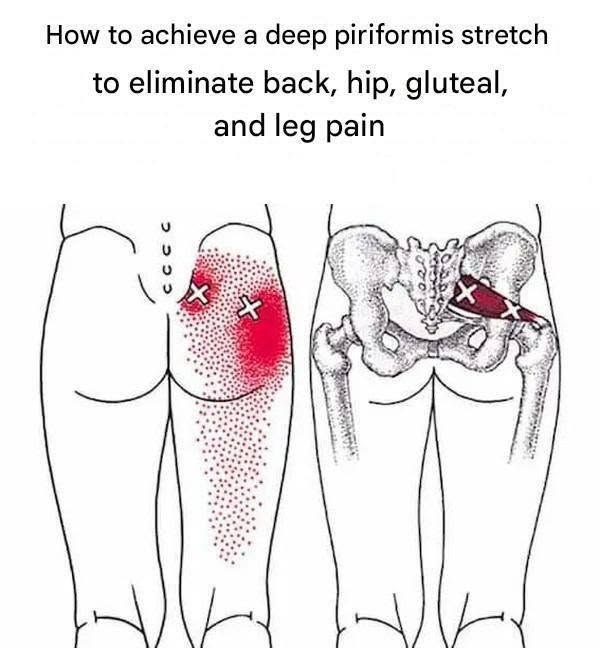
A deep stretch for the piriformis can definitely help reduce tension that contributes to buttock, hip, and radiating leg pain, but it’s important to set expectations: if the pain is coming from something like a lumbar disc issue, nerve compression, or hip joint pathology, stretching alone won’t “eliminate” it — it’s more of a supportive tool.
Here are the most effective, evidence-based options:
1) Piriformis stretch (lying version — very effective)
How to do it:
- Lie on your back
- Bend both knees, feet flat on the floor
- Cross your right ankle over your left thigh (just above the knee)
- Gently pull your left thigh toward your chest
- Keep your head and shoulders relaxed
What you should feel:
A deep stretch in the right buttock/outer hip
Hold: 20–40 seconds
Reps: 2–4 each side
2) Figure 4 stretch (more controlled & beginner-friendly)
This is basically a structured version of the same idea.
How to do it:
- Lie on your back
- Form a “4” shape with your legs (ankle over opposite knee)
- Use your hands or a strap behind the thigh to pull in gently
- Keep your lower back relaxed (don’t force it flat)
Tip: If it’s too intense, move the bottom foot farther away from your body.
3) Pigeon pose (deep stretch — more advanced)
How to do it:
- From a plank or tabletop position, bring one knee forward toward your hand
- Extend the opposite leg straight behind you
- Lower your torso forward slowly
Important:
- Don’t force the front knee angle
- Use a cushion under the hip if needed
Key technique points (this matters more than intensity)
- Keep the stretch gentle, not painful
- Avoid rounding or twisting your lower back aggressively
- Breathe slowly into the stretch (don’t hold your breath)
- Consistency beats intensity (daily mild stretching > occasional deep forcing)
When stretching alone is NOT enough
If you have any of these, you may need more than stretching:
- pain radiating below the knee
- numbness/tingling
- weakness in the leg
- pain worsened by sitting + coughing/sneezing
These can suggest nerve involvement (like sciatica from the spine), not just piriformis tightness.
Simple upgrade that helps a lot
Pair stretching with:
- glute strengthening (bridges, clamshells)
- frequent standing breaks if you sit a lot
If you want, describe your exact pain pattern (where it starts, where it travels, what triggers it), and I can help you figure out whether it actually fits piriformis tightness or something coming from the lower back.