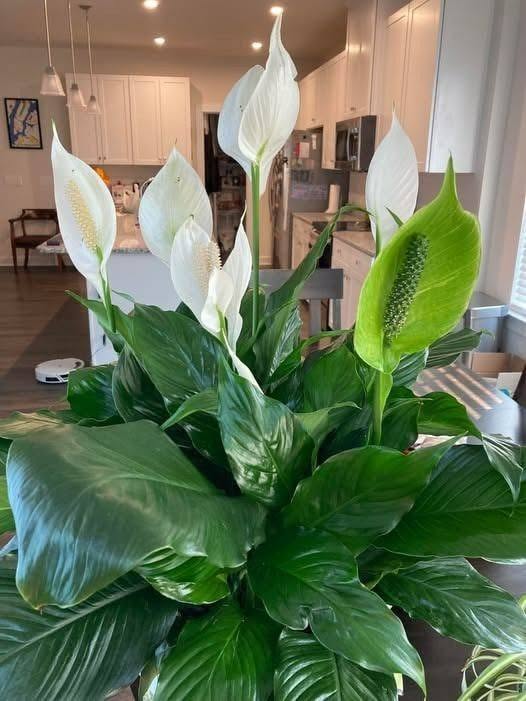
How to Get Your Peace Lily to Flower More — Expert Tips for Lush Blooms
Peace lilies (Spathiphyllum) are popular houseplants known for their glossy leaves and white flower-like blooms. If your peace lily has lots of leaves but few flowers, it may simply need the right conditions.
1. Give it the right amount of light
- Peace lilies prefer bright, indirect light.
- Too little light often leads to healthy-looking leaves but fewer blooms.
- Avoid harsh direct sunlight, which can scorch the leaves.
2. Water correctly
- Keep the soil lightly moist, but avoid keeping it soggy.
- Water when the top inch of soil feels dry.
- Yellowing leaves can be a sign of overwatering, while drooping leaves often indicate thirst (though severe drooping can also occur from root problems).
3. Use the right fertilizer
- During the growing season, a balanced houseplant fertilizer used according to label instructions can support flowering.
- Too much nitrogen can encourage leaf growth at the expense of blooms.
4. Provide suitable temperature and humidity
Peace lilies prefer:
- Warm indoor temperatures
- Moderate to higher humidity
- Protection from cold drafts and sudden temperature changes
5. Repot when needed
A root-bound plant may struggle if it has outgrown its pot.
Signs include:
- Roots circling tightly
- Water running straight through the pot
- Slower growth
Repot into a slightly larger container with fresh, well-draining potting mix.
6. Remove old blooms and damaged leaves
Cutting off faded flowers and yellow leaves helps the plant focus energy on new growth.
7. Be patient
Peace lilies do not bloom constantly. Flowering depends on:
- Plant maturity
- Light levels
- Growing conditions
- Seasonal changes