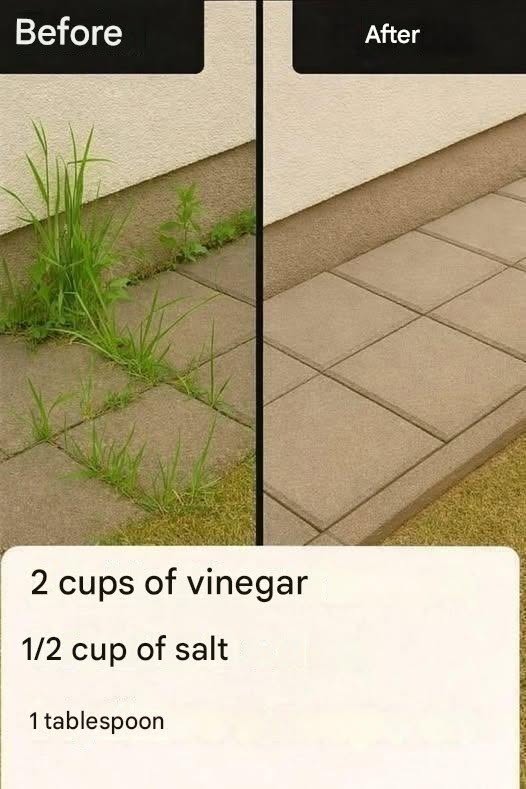
A “super-effective” homemade herbicide can kill or damage unwanted plants, but it’s important to know that homemade mixtures are often non-selective—they can harm desirable plants and affect soil if overused.
One commonly used homemade weed killer is:
Vinegar-Based Herbicide
Ingredients
- 1 gallon (3.8 L) white vinegar (5% acetic acid)
- 1 tablespoon liquid dish soap
Instructions
- Mix the ingredients in a spray bottle or garden sprayer.
- Spray directly onto the leaves of weeds on a dry, sunny day.
- Avoid spraying nearby plants you want to keep.
How it works
- The vinegar dries out and damages plant tissue.
- The soap helps the solution stick to the leaves.
Important Limitations
- It works best on young, annual weeds.
- It often kills only the top growth of established perennial weeds, which may regrow from the roots.
- It can damage any plant it contacts, not just weeds.
For Better Long-Term Weed Control
- Pull weeds before they set seed.
- Apply mulch 2–4 inches thick around garden plants.
- Use landscape fabric in areas where appropriate.
- Repeatedly remove regrowth from persistent weeds to exhaust their root reserves.
When using any herbicide, homemade or commercial, wear gloves and avoid spraying on windy days to prevent drift onto desirable plants.