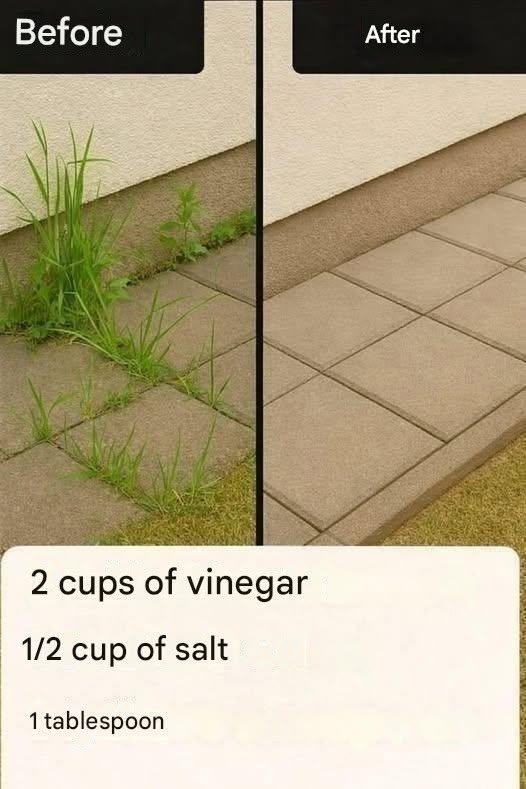
Here are the most commonly used safe-ish DIY options:
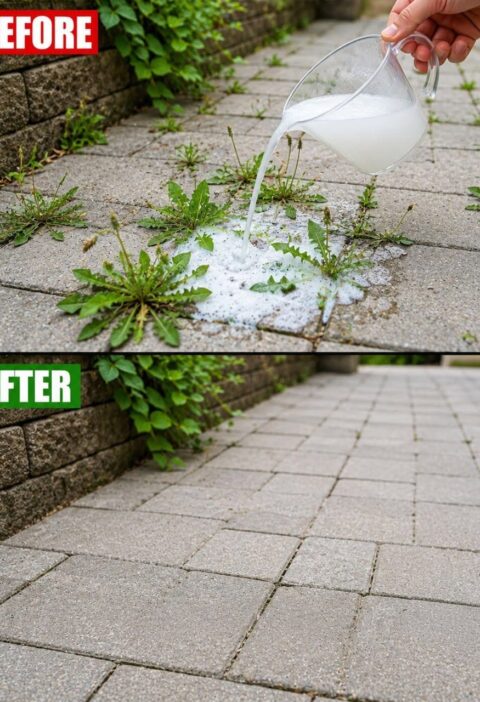
🧴 1. Vinegar-based herbicide (most common)
- White vinegar (5–20% acidity if available)
- A little dish soap (helps it stick)
How it works: burns leaves on contact
Best for: young weeds in cracks or paths
⚠️ Doesn’t usually kill deep roots
💧 2. Boiling water (simplest method)
- Pour directly onto weeds
How it works: destroys plant cells instantly
Best for: pavement cracks, driveways
✔ Very fast
❌ No soil protection (weeds may return)
🧂 3. Salt solution (use carefully)
- Salt + water spray
How it works: dehydrates plants
Best for: isolated weeds in non-plant areas
⚠️ Important:
- Can damage soil long-term
- May prevent future plant growth in that area
🍶 4. Vinegar + salt + soap mix (stronger version)
Typical DIY mix:
- Vinegar
- Salt
- Dish soap
Effect: stronger leaf burn and dehydration
⚠️ Still not a true “permanent” solution
🌿 Important truth
Even strong chemical herbicides don’t make weeds “never grow again” because:
- roots survive
- seeds remain in soil
- new seeds blow in from outside
🧠 Best long-term weed control
If you actually want lasting results:
- Pull weeds with roots
- Use mulch or ground cover
- Block sunlight in empty soil areas
- Maintain regular removal
⚠️ Safety note
DIY herbicides can:
- damage nearby plants
- irritate skin/eyes
- harm soil if overused (especially salt)
🧠 Bottom line
Homemade herbicides can kill visible weeds quickly, but they are not permanent solutions. Long-term weed control comes from prevention and root removal, not sprays alone.
If you want, I can tailor a weed-control plan for your exact situation (garden, lawn, driveway, or walls).