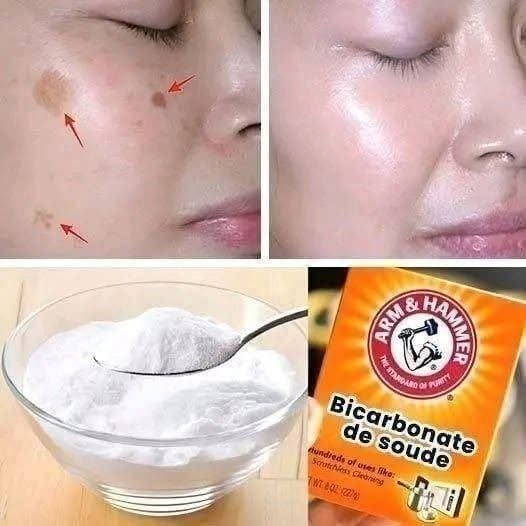
Baking Soda for Dark Spots, Wrinkles & Dark Circles: What You Should Know
You may see recipes recommending baking soda (sodium bicarbonate) as a facial scrub or mask. But it isn’t a proven treatment for dark spots, wrinkles, or dark circles—and using it regularly on your face can irritate and dry the skin.
Your skin naturally has a mildly acidic pH. Products that are too alkaline can disrupt the skin barrier and contribute to dryness, irritation, and sensitivity.
C
Cleveland Clinic
Safer options
Dark spots: Daily broad-spectrum SPF 30+ is one of the most important steps. Ingredients such as vitamin C, azelaic acid, or appropriately formulated exfoliating acids may help fade pigmentation over time.
Fine lines and wrinkles: Moisturizer and daily sunscreen help, while retinoid products have considerably better evidence for improving signs of photoaging than baking soda.
Dark circles: Their cause matters. Genetics, pigmentation, allergies, lack of sleep, shadows from facial anatomy, and aging can all contribute, so there isn’t one remedy that works for everyone.
If you still want to use baking soda
I’d avoid putting a baking-soda paste directly on your face, particularly around the eyes. Don’t scrub with it, and never use it on broken or irritated skin.
Bottom line: Baking soda may be useful for some household cleaning jobs, but it isn’t a safe shortcut to younger-looking or brighter facial skin. Gentle skincare and sun protection are much better choices.
C
Sources