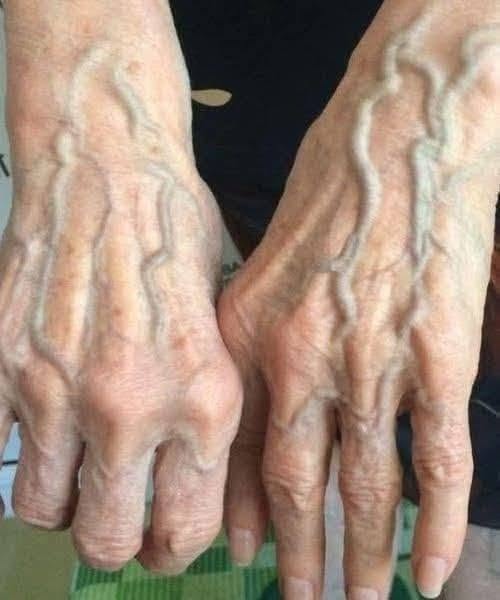
The claim “If you have visible veins, it means you are…” is incomplete and often used as clickbait. In reality, visible veins usually do not indicate a specific disease or health condition on their own.
Here are some common reasons why veins are more visible:
- Low body fat: People with less fat under the skin often have more noticeable veins.
- Exercise: Physical activity temporarily increases blood flow, making veins appear larger.
- Aging: As skin becomes thinner and loses elasticity with age, veins can become more prominent.
- Genetics: Some people naturally have more visible veins due to inherited skin and vein characteristics.
- Warm temperatures: Heat causes blood vessels to widen, making veins easier to see.
- Fair or thin skin: Veins tend to show through light-colored or thin skin more easily.
When visible veins may need medical attention
Visible veins should be evaluated by a healthcare professional if they are accompanied by:
- Pain, tenderness, or swelling
- Redness or warmth over the vein
- Bulging, twisted veins that cause aching or heaviness (possible varicose veins)
- A sudden change in appearance, especially in one limb
Bottom line
For most people, visible veins are a normal variation and are related to body composition, skin thickness, age, temperature, or genetics—not a sign that you are especially healthy or unhealthy. If the veins are new, painful, or associated with other symptoms, it’s a good idea to seek medical advice.