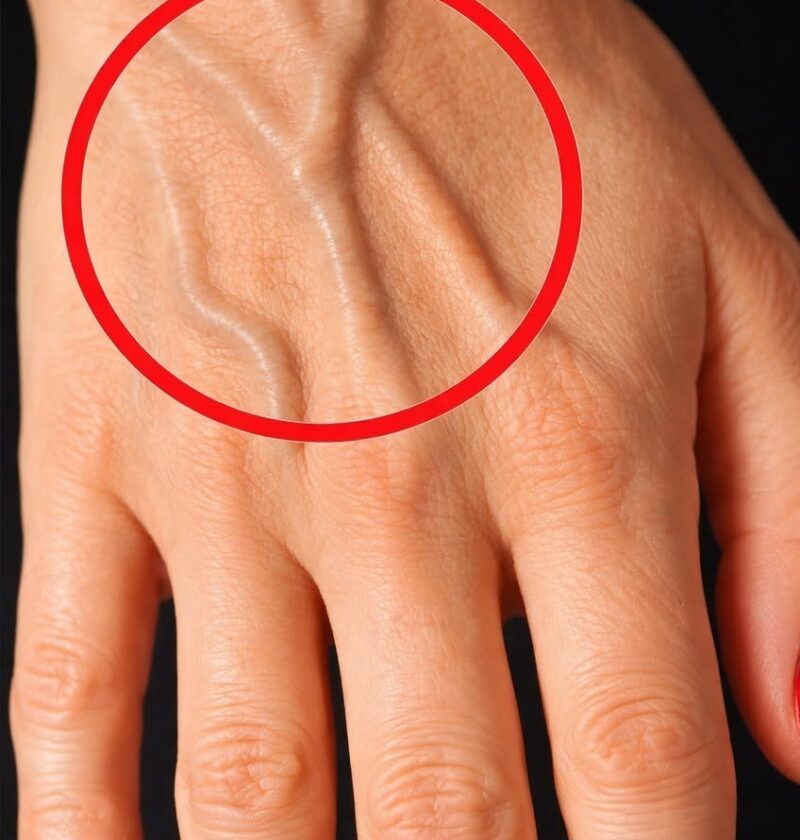
If your veins are clearly visible, it usually means the veins are close to the surface of your skin, not that something is necessarily wrong.
What visible veins can mean
You have lower body fat
Less fat beneath the skin makes veins easier to see.
This is particularly common on the hands, forearms, shoulders, and legs.
You have naturally thin or translucent skin
Genetics play a major role in how visible your veins are.
Some people naturally have prominent veins even at a higher body-fat percentage.
You exercise regularly
Exercise increases blood flow and temporarily expands blood vessels.
Weight training can make veins look especially prominent because of the “muscle pump.”
You are warm
Heat causes blood vessels near the skin to dilate, making veins more noticeable.
You may be dehydrated
Significant dehydration can make veins appear more prominent because there is less fluid in the tissues.
However, visible veins alone are not a reliable way to diagnose dehydration.
You have increased muscle mass
More muscle can push superficial veins closer to the skin’s surface.
This is one reason muscular people often have prominent forearm and shoulder veins.
You are getting older
Skin gradually becomes thinner and loses some of its underlying fat and elasticity, making veins more visible.
When visible veins could be a warning sign
Pay more attention if the change is new or sudden, particularly if you also have:
A swollen arm or leg
Pain or tenderness along a vein
Redness or warmth
A hard, cord-like vein
Significant swelling on only one side
Shortness of breath or chest pain
Those symptoms can sometimes indicate a vascular problem and should be medically evaluated.
Bottom line: Visible veins most often mean genetics + low/normal body fat + thin skin + exercise/heat, rather than a specific disease. Visible veins by themselves don’t tell you whether your kidneys, heart, or circulation are healthy.