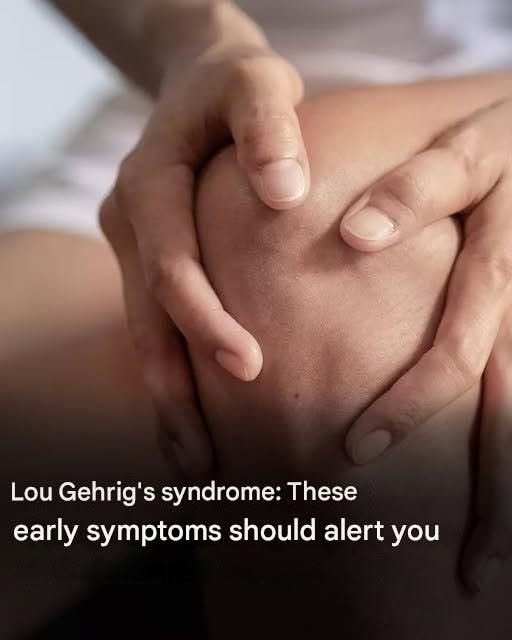
“Lou Gehrig’s disease” is another name for a serious neurological condition called:
Amyotrophic lateral sclerosis (ALS)
It affects the nerve cells that control voluntary muscles, leading to gradual weakness over time.
Early symptoms (what usually appears first)
ALS symptoms often start subtly and vary, but common early signs include:
- Muscle weakness in one hand, arm, or leg
(e.g., trouble gripping objects or lifting things) - Clumsiness or frequent tripping
(foot drop or leg weakness) - Muscle twitching (fasciculations)
small involuntary muscle movements, often in arms or legs - Slurred speech
or changes in voice clarity - Difficulty with fine motor tasks
like buttoning shirts or writing - Muscle cramps or stiffness
Important reality check
- ALS is rare
- Early symptoms are often mild and easily confused with other conditions
- Many more common problems (pinched nerves, vitamin deficiencies, fatigue, stress) can cause similar symptoms
When to seek medical attention
It’s important to see a doctor if:
- Weakness is progressive (getting worse over weeks/months)
- Symptoms affect multiple body areas
- There is persistent speech or swallowing difficulty
Bottom line
Early ALS symptoms usually involve gradual, progressive muscle weakness and coordination problems, not sudden changes or isolated minor symptoms.
If you want, you can describe what you’re noticing, and I can help you understand whether it sounds concerning or more likely something benign.