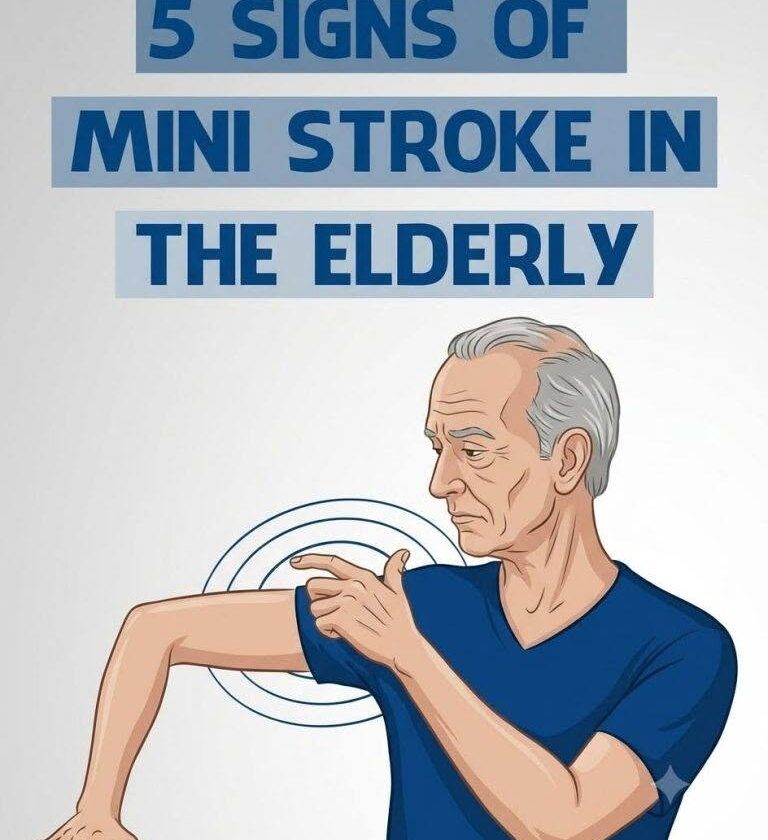
Mini-Strokes Often Go Unnoticed: 9 Symptoms You Should Never Ignore
A transient ischemic attack (TIA) is often called a “mini-stroke,” but “warning stroke” is more accurate. It happens when blood flow to part of the brain is temporarily interrupted. Symptoms may disappear within minutes or hours, but that does not make them harmless.
W
www.stroke.org
+1
Watch for sudden:
Numbness or weakness of the face, arm, or leg—especially on one side.
Facial drooping or an uneven smile.
Slurred speech or difficulty speaking.
Difficulty understanding what other people are saying.
Sudden vision changes, including blurred, double, or lost vision in one or both eyes.
Sudden dizziness or loss of balance.
Difficulty walking or coordinating movements.
Sudden confusion or unusual difficulty thinking.
A severe headache with no obvious cause.
W
www.stroke.org
+1
Don’t wait for the symptoms to disappear
The biggest mistake is thinking, “I’m fine now, so it must not have been serious.” You cannot reliably tell a TIA from a stroke at home. Anyone experiencing these symptoms needs urgent medical assessment, even if everything returns to normal.
W
www.stroke.org
+1
Remember B.E. F.A.S.T.:
B — Balance loss
E — Eye/vision changes
F — Face drooping
A — Arm weakness
S — Speech difficulty
T — Time to call emergency services
If these symptoms are happening right now, call your local emergency number immediately and note the time the symptoms began. Fast treatment can reduce the risk of permanent disability.
W
www.stroke.org
+1
Bottom line: A TIA isn’t something to monitor at home. Even a brief episode can be an important warning that a major stroke could follow.
W
Sources